12 Christmas Stocking Ideas
Stockings are the first thing most families reach for on Christmas morning, and they set the tone for the whole day. A good stocking does not need to be expensive. It needs to be big enough to hold a few small surprises, sturdy enough to hang from the mantel without sliding off, and personal enough that everyone knows which one is theirs. Whether you buy, sew or improvise, the ideas below cover every budget and skill level.
Before you start, measure your mantel or hanging spot. A standard stocking is about 18 inches long and 7 inches wide at the foot, which fits an orange, a few wrapped sweets, a small toy or a gift card. Oversized stockings look impressive but sag when full, so keep the fillings light if you go big. If you hang stockings from a staircase banister, use ribbon or hooks rather than nails, and keep them clear of candles and the fireplace opening. Stocking holders that clamp onto the mantel shelf cost around $5 to $10 each at craft stores and are worth it if you do not want holes in your woodwork.
Most of these ideas take an evening or less. Sewing projects need basic supplies you may already own, and no-sew options use fabric glue or iron-on tape. Decide who each stocking is for first, because a toddler, a teenager and a dog need very different fillings, and buy or make the stocking to match the person rather than the other way around.
Jump to an idea (12)
- Classic red and white knit stockings
- Personalized embroidered stockings
- Mini stockings as tree ornaments
- Rustic burlap and twine stockings
- Velvet stockings with faux fur trim
- Stockings hung from the staircase
- Patchwork stockings from fabric scraps
- Advent countdown stockings
- Stockings for pets
- DIY no-sew felt stockings
- Monogrammed stockings with iron-on letters
- A five-dollar stocking makeover
1. Classic red and white knit stockings

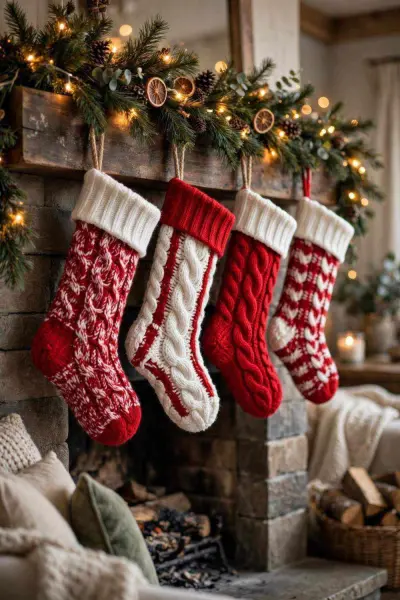
A chunky knit stocking in red and cream never goes out of style, and it suits almost any living room. Ready-made knit stockings cost around $8 to $15 each at home stores, or you can knit one yourself if you know basic stitches: a simple stocking in bulky yarn takes about 4 to 6 hours for a confident knitter. Look for a tight knit so small fillings do not poke through, and choose a cuff that folds down so the stocking hangs flat against the mantel.
To make matching stockings feel personal without buying different designs, add a small wooden name tag, a ribbon in each person's favourite colour, or a pom-pom in a different shade on each cuff. Wash knit stockings gently by hand and dry them flat so they keep their shape. If you store them folded in a box with a lavender sachet, they will come out fresh next December and last for years. If you buy a set of four matching knit stockings, most home stores sell them for around $30 to $40, which works out cheaper than buying them one at a time.
2. Personalized embroidered stockings
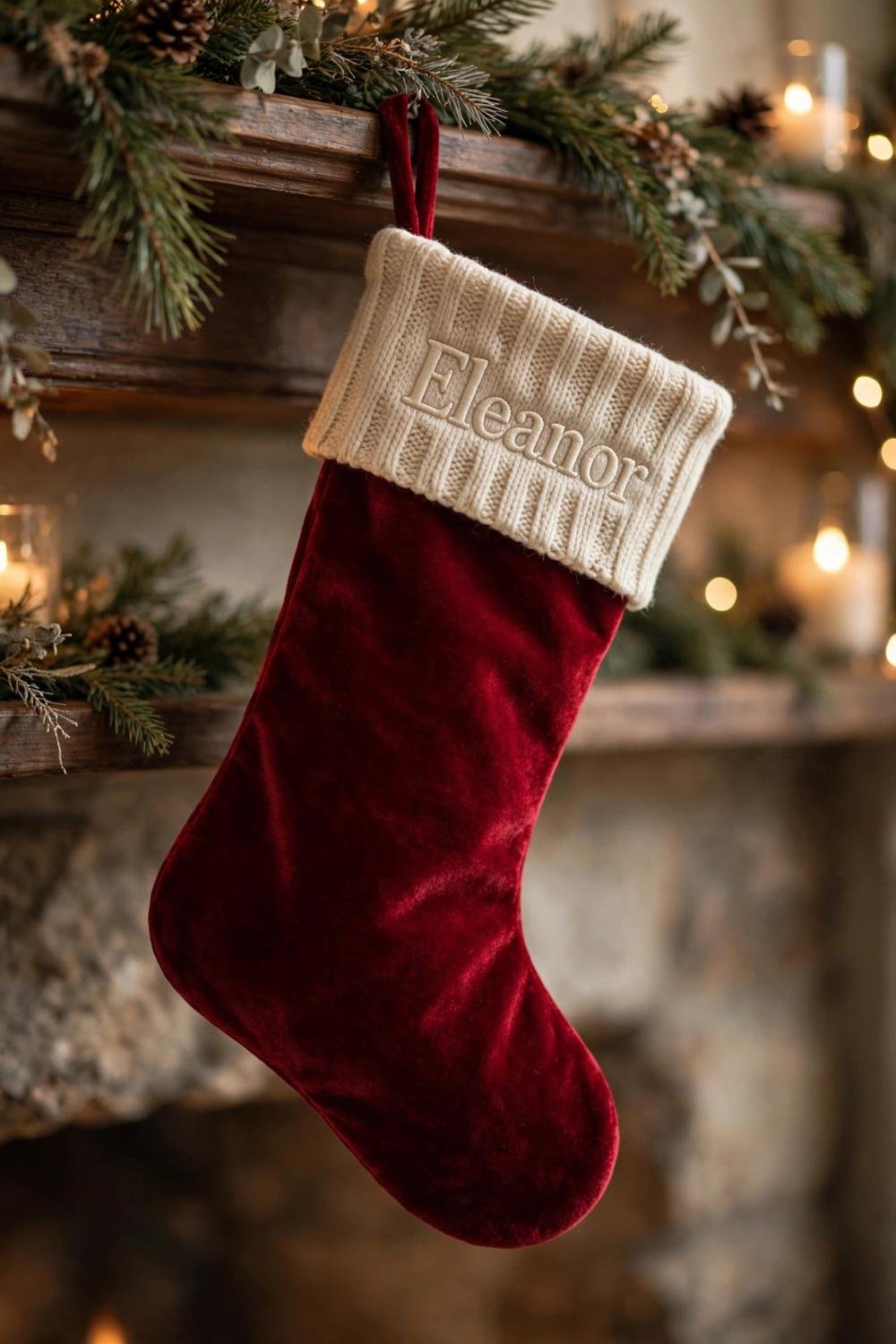
An embroidered name turns an ordinary stocking into a keepsake, and it ends the annual argument about whose stocking is whose. Many craft stores and online sellers will embroider a name onto a stocking you buy from them for $5 to $10, or you can do it yourself with an embroidery hoop, a needle and two strands of floss in a contrasting colour. A simple backstitch in capital letters is readable and forgiving, and a child's name takes about 30 minutes to stitch.
Choose thread that stands out against the fabric: cream thread on red, gold on green, or dark red on white. Keep the letters at least an inch tall so they can be read from across the room. If you are embroidering on velvet or a thick knit, use a stabilizer on the back so the stitches do not sink into the pile. A first Christmas stocking with a baby's name and the year is a gift in itself, and it becomes one of those decorations that comes out every year without discussion. If you order embroidery online, allow at least a week for delivery in December, because personalised items take longer to make and ship.
3. Mini stockings as tree ornaments
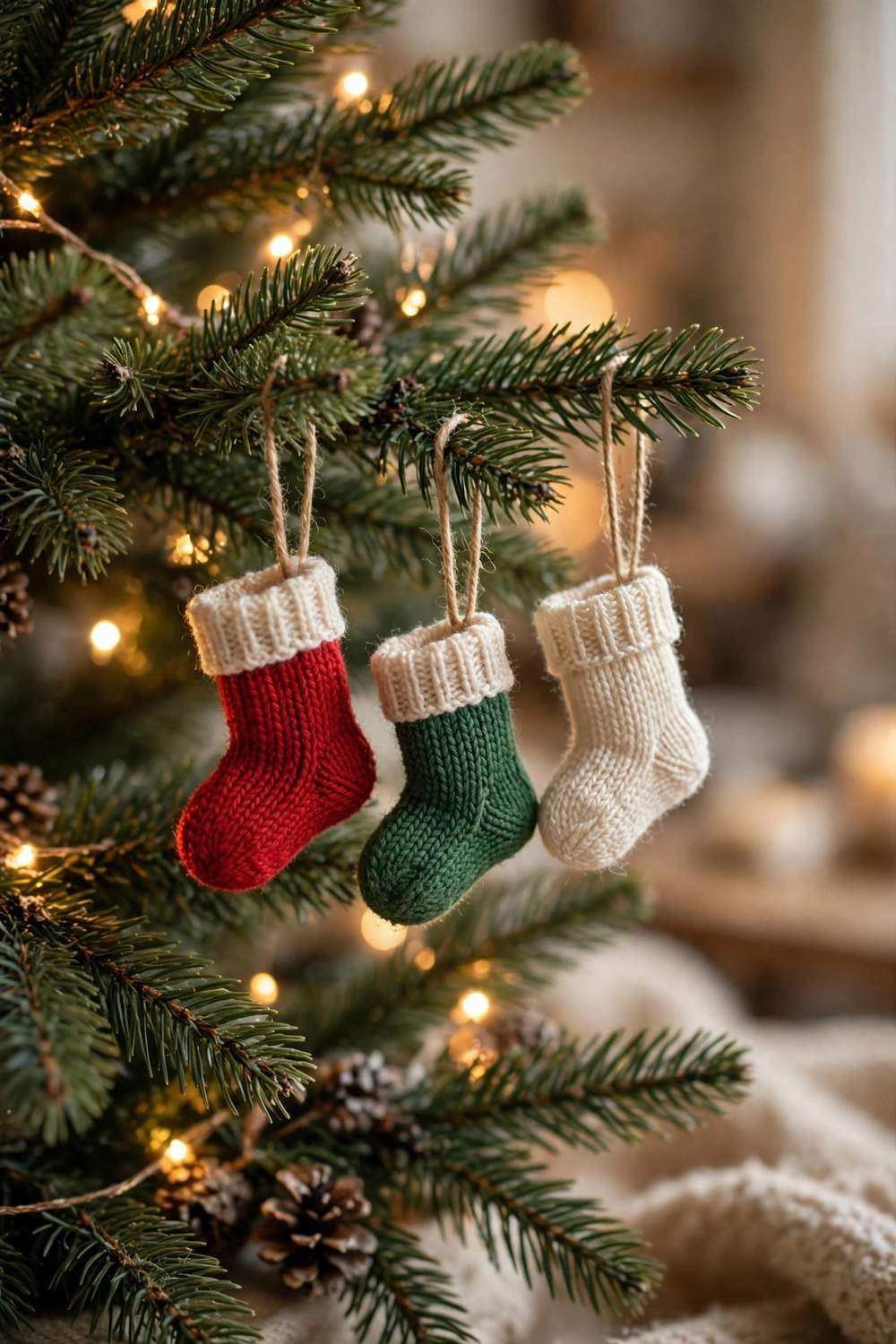
Mini stockings, about 4 to 6 inches long, make charming tree ornaments and double as tiny gift holders for a coin, a sweet or a rolled-up note. You can buy a set of six for around $6 to $10, knit them from leftover yarn in an evening, or cut them from felt and stitch the edges. Hang them from the branches with ribbon or ornament hooks, spacing them evenly so the tree does not look lopsided.
Fill each mini stocking with one small surprise and let family members pick one on Christmas Eve, or use them as place markers at the Christmas table with a name tag tied to the cuff. They also work as a countdown: hang 12 or 24 of them on a string and take one down each day. Keep the fillings flat and light so the branches do not droop, and avoid anything sticky that could stain the tree skirt if it falls. A set of mini stockings also makes a sweet gift topper: tie one to a wrapped present instead of a bow and the recipient gets a small ornament to keep.
4. Rustic burlap and twine stockings
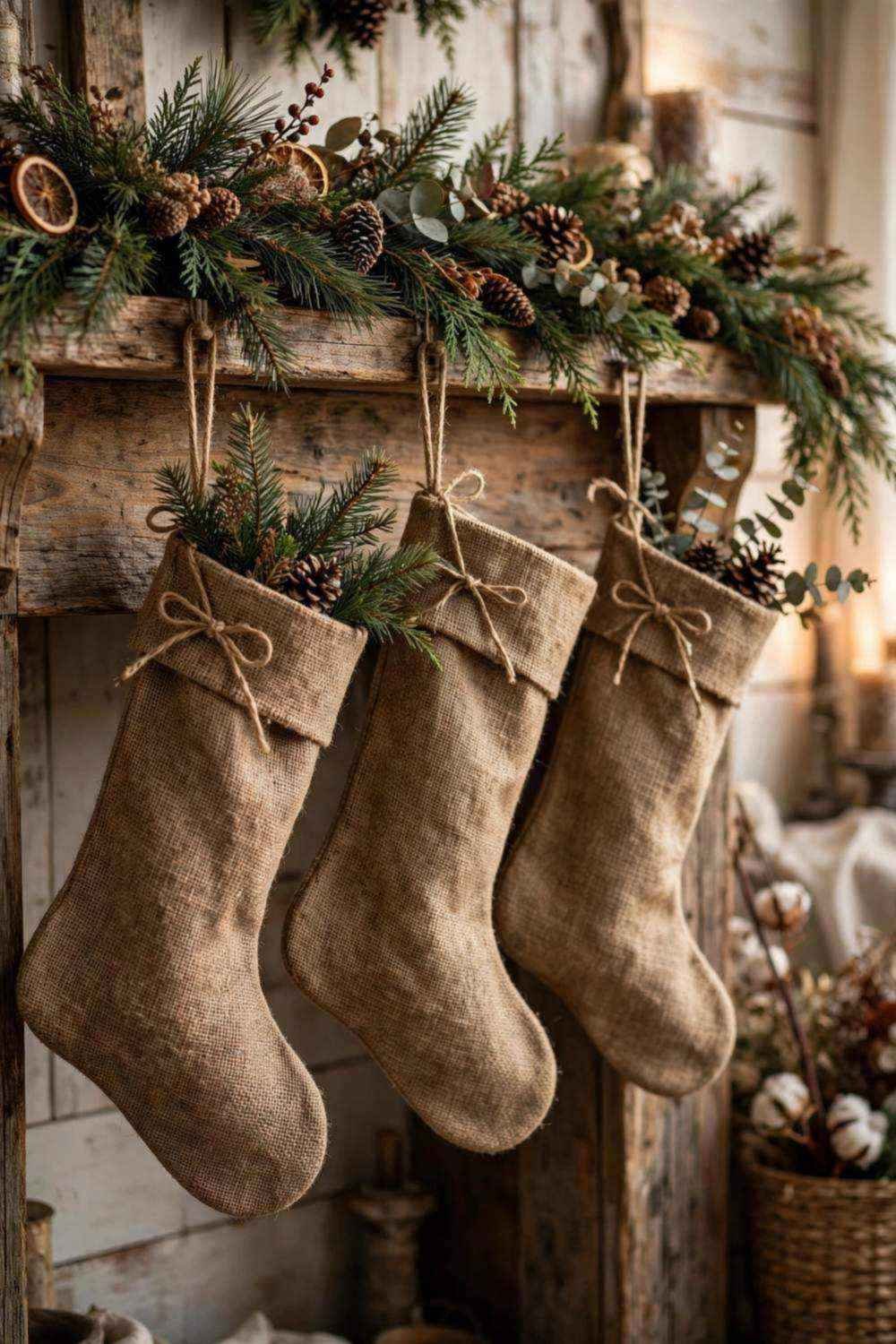
Burlap stockings suit a farmhouse or rustic living room, and they are one of the cheapest to make. A yard of burlap costs around $3 to $5 and makes two or three stockings. Cut two stocking shapes, sew or glue the edges, turn them right side out and add a twine loop for hanging. A sprig of pine, a cinnamon stick or a small pine cone tied to the cuff finishes the look without any extra cost.
Burlap frays, so run a line of fabric glue or a zigzag stitch along the cut edges before you sew, and line the stocking with a cotton offcut if you plan to put food inside. The rough texture hides small mistakes, which makes this a good first sewing project. Pair burlap stockings with a simple pine garland and plain white lights, and the whole mantel looks deliberate rather than unfinished. Store them flat in a bag so the burlap does not snag on other decorations. A hot glue gun works well for attaching the pine sprig and cinnamon stick, and it holds better than craft glue on the rough burlap surface.
5. Velvet stockings with faux fur trim
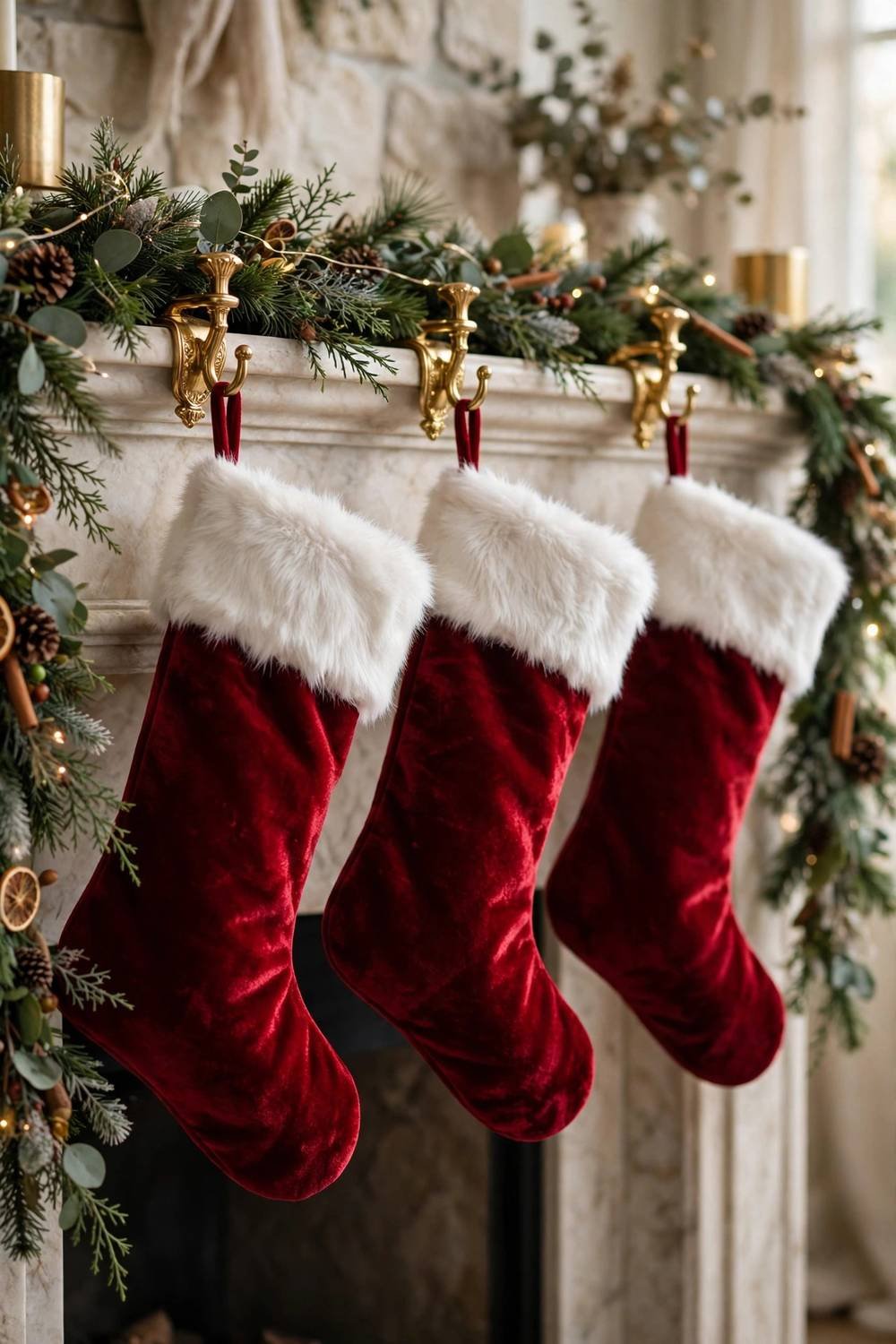
Velvet stockings with a white faux fur cuff look expensive and feel soft, and they are widely available for $10 to $20 each in deep red, green, navy or cream. The fur cuff is the part that makes them look finished, so check that it is sewn on evenly and does not shed when you brush it. A velvet stocking holds its shape well when full, which matters if you like to fill stockings generously.
If you sew your own, velvet needs sharp scissors and pins, and a walking foot on a sewing machine helps stop the layers from shifting. Use a cotton lining so the inside does not catch on small items. Faux fur trim can be bought by the yard at craft stores for a few dollars. Keep velvet stockings away from the fire and brush the fur cuff with a dry cloth before hanging so it looks full. They pair well with gold or brass stocking holders and a simple green garland. If you buy velvet stockings in the January sales, you can often find them for half price, so it pays to plan a year ahead.
6. Stockings hung from the staircase
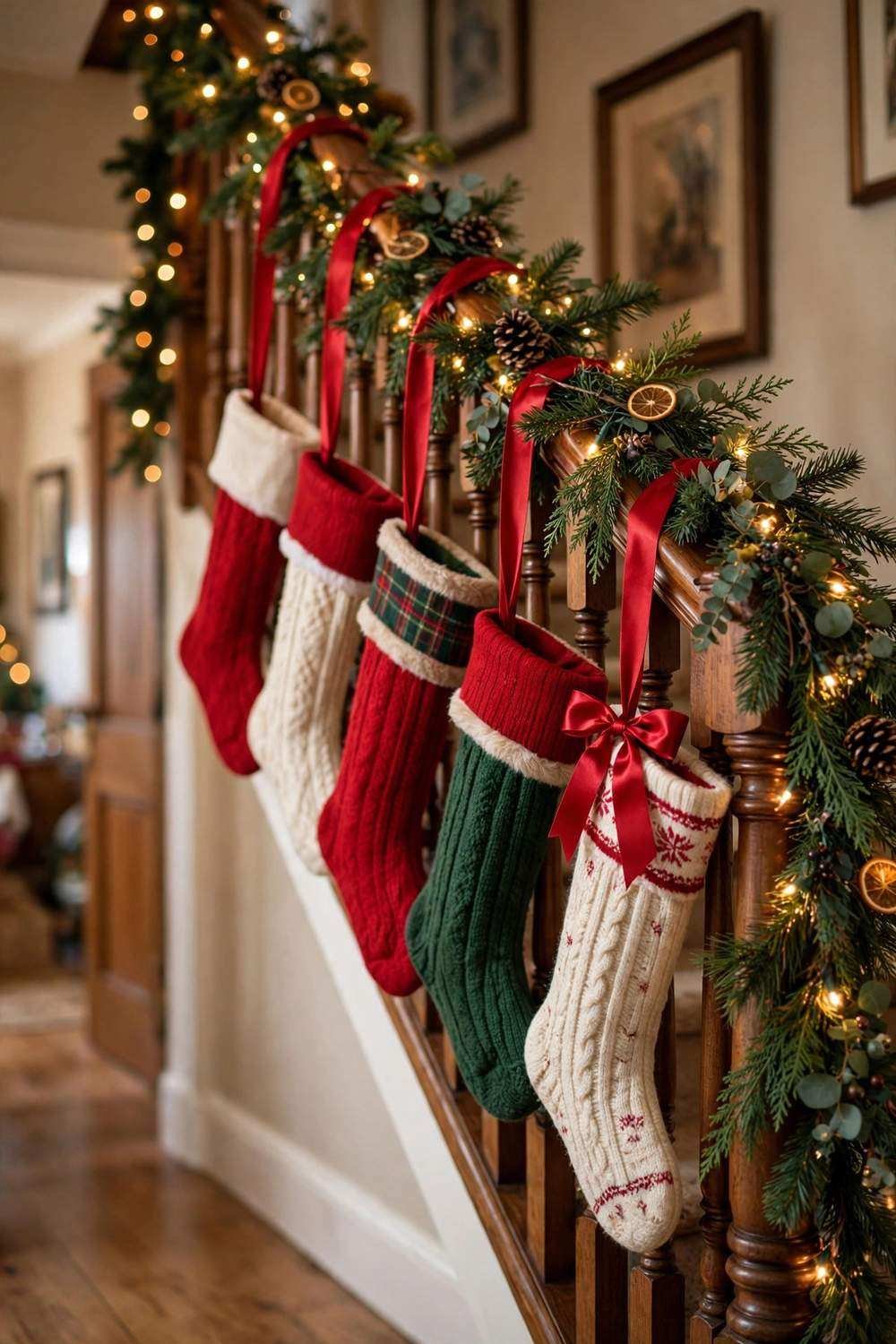
If your mantel is full, small or taken up by a television, the staircase banister is the next best place for stockings. Tie each stocking to the banister with a wide ribbon in a matching colour, spacing them about a foot apart so they do not bunch together. Ribbon is better than hooks here because it does not scratch the wood, and you can adjust the height so the stockings hang at the same level even if the banister slopes.
Weave a garland of pine or eucalyptus along the banister first, then attach the stockings to the garland rather than directly to the wood. Battery fairy lights woven through the garland look warm in the evening and cost little to run. Keep the stockings light, because a heavy stocking pulls the garland down and can slide along the banister. This arrangement works well in a hallway or entryway where guests see it as soon as they come in, and it frees the mantel for candles and cards. Check the banister is sturdy before you hang anything heavy, and use ribbon wide enough to grip the wood so the stockings do not slide down overnight.
7. Patchwork stockings from fabric scraps
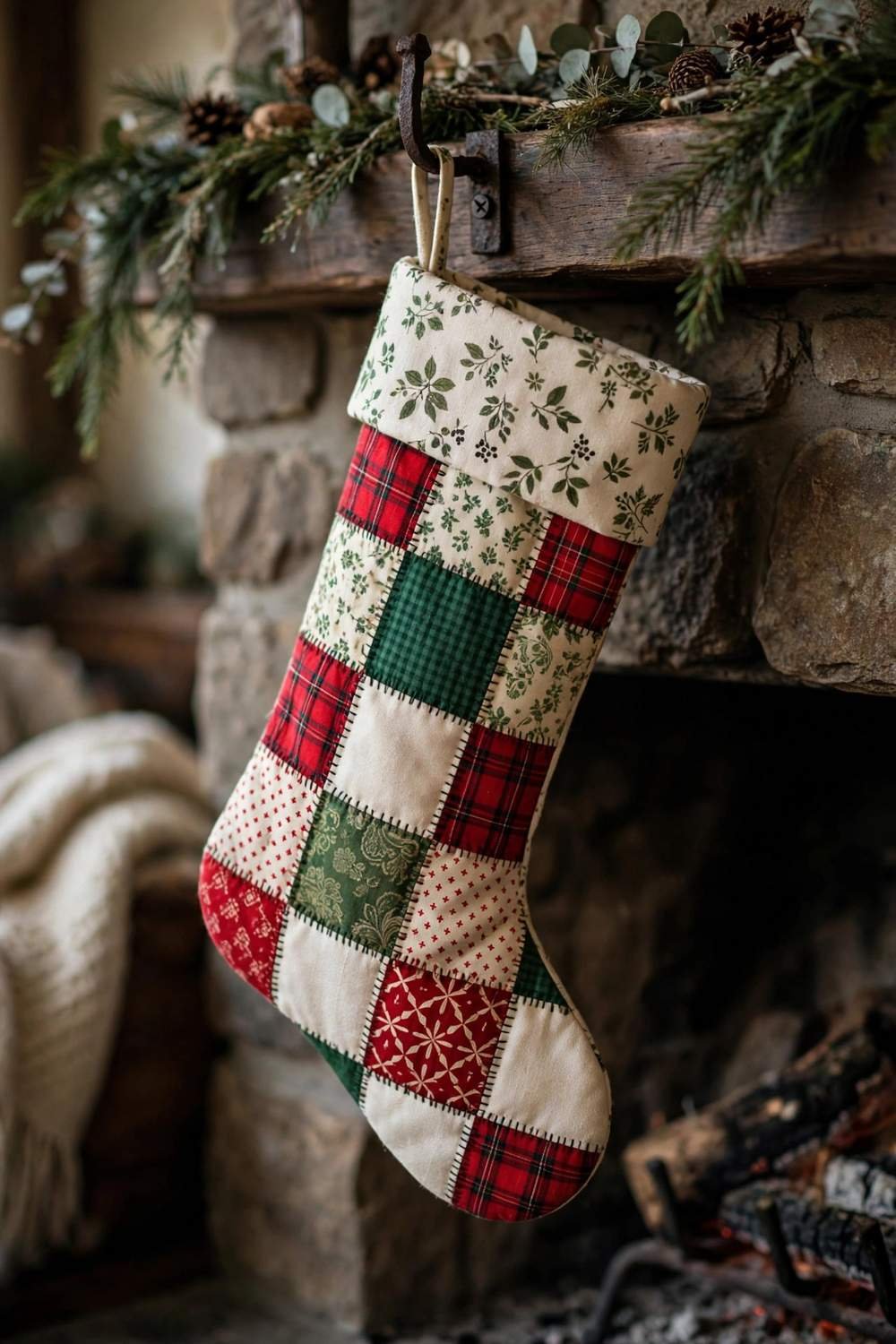
A patchwork stocking uses up fabric scraps and gives each stocking a different pattern, which is useful when you want them to look coordinated but not identical. Cut squares of about 3 inches from cotton, flannel or old shirts, sew them into a rectangle, then cut the stocking shape from the patched fabric. A fat quarter bundle, usually around $10 to $12 for five or six pieces, gives you enough variety for several stockings.
Press the seams flat as you go so the finished stocking lies smooth, and use a plain backing fabric in a solid colour so the patchwork stands out. If you are short on time, sew the patches onto a ready-made plain stocking instead of building the whole thing from scratch. This is a good way to use fabric from a child's old clothes or a favourite shirt, which makes the stocking personal. Label each one with a small tag so you remember whose scraps went where. If you do not have enough scraps, a single fat quarter in a Christmas print gives you enough fabric for two stockings with a plain backing.
8. Advent countdown stockings
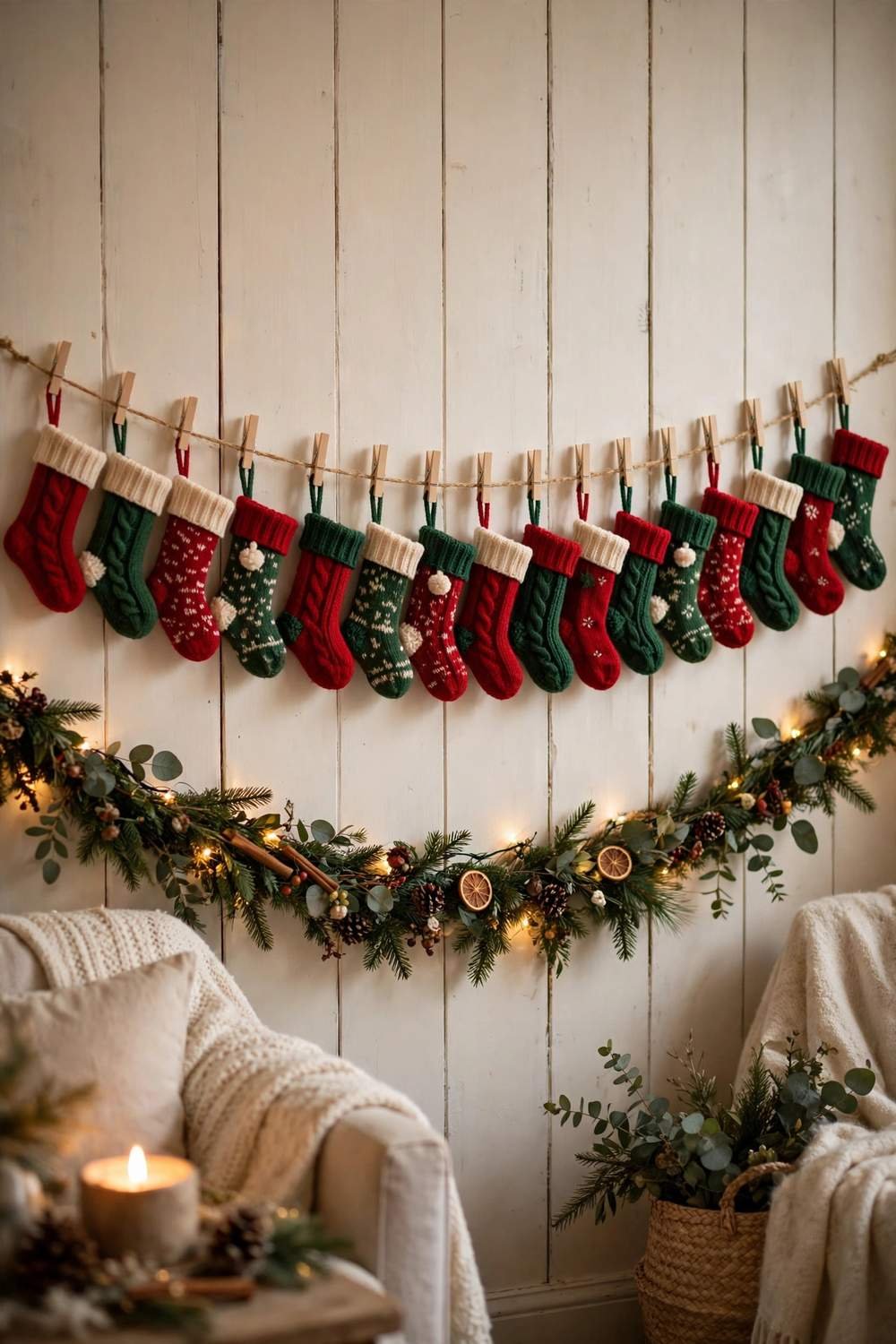
Instead of one big stocking per person, hang a row of 24 mini stockings numbered 1 to 24 and fill each with a small treat or activity card. Small stockings about 5 inches long work best, and you can buy a set or sew them from felt in a weekend. Hang them on a string across a wall or along the mantel with mini clothespins, keeping the numbers out of order so children enjoy hunting for the right one each day.
Fill them with wrapped sweets, stickers, a joke, a small toy or a note with an activity such as baking cookies or watching a Christmas film. Keep a master list of what is in each stocking so you can refill the set next year without starting from scratch. The whole display costs less than most store-bought advent calendars, and it doubles as decoration for the whole month. Put the larger treats on weekend days when there is time to enjoy them. Write the activity cards in pencil first so you can swap them around if the weather or your plans change during December.
9. Stockings for pets
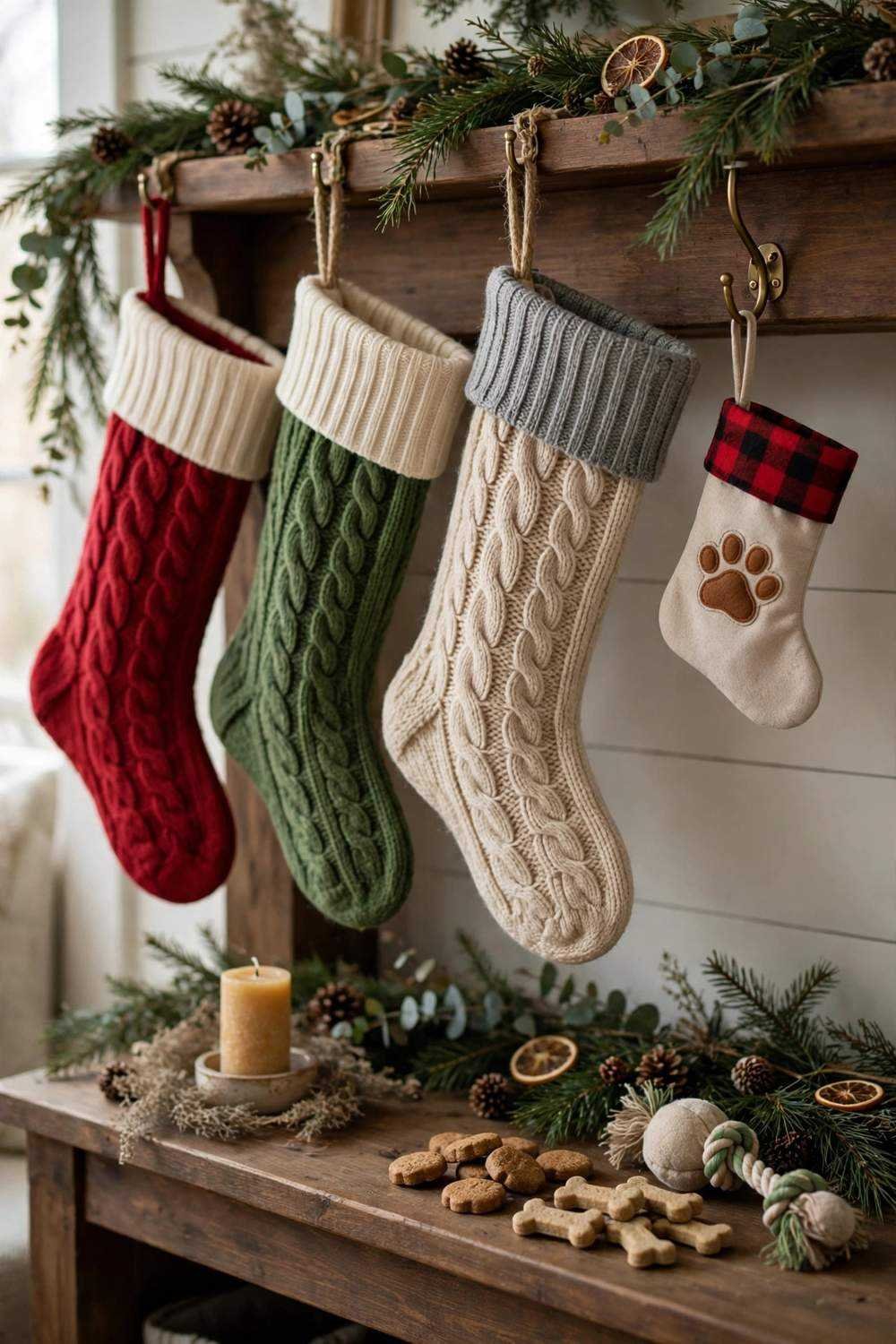
Pets notice when everyone else gets a stocking, so make a small one for the dog or cat. A pet stocking is usually about 10 to 12 inches long and can be bought for $5 to $8 or sewn from felt in under an hour. Add a paw print applique or the pet's name so it is easy to spot, and hang it slightly lower than the others or on a hook near the pet's bed.
Fill it with treats the pet can actually eat, a small toy or a new collar, and avoid anything with chocolate, xylitol, cooked bones or small parts that can be swallowed. For cats, a catnip toy or a few treats works well; for dogs, a chew stick or a tennis ball fits. Keep the pet stocking out of reach until Christmas morning if your dog is a chewer, and check that any toy is the right size for the animal. It is a small touch, but it makes the pet part of the morning routine. Keep a spare pet stocking in the cupboard in case the first one gets chewed, because it usually does.
10. DIY no-sew felt stockings
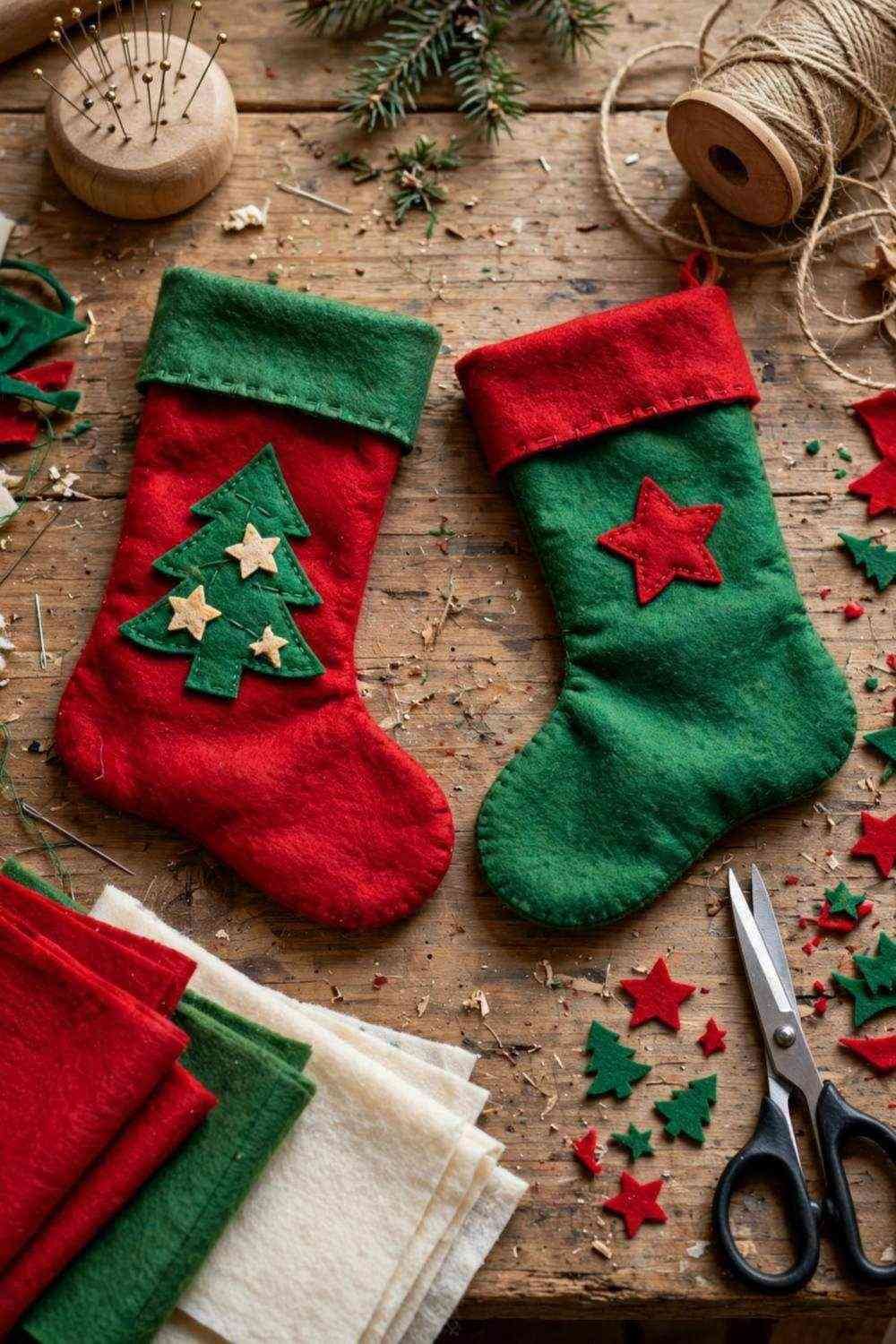
Felt stockings are the easiest to make from scratch because felt does not fray and needs no hemming. Buy felt sheets for about 50 cents each, cut two stocking shapes, and join them with fabric glue or iron-on hem tape. Add a cuff in a contrasting colour, then decorate with felt cut-outs such as trees, stars or snowflakes glued on in layers. A child can make their own in about an hour with adult help for the cutting.
Use a template printed from the internet or draw your own on cardboard so every stocking is the same size. Fabric glue needs a few hours to dry, so make the stockings the day before you plan to hang them. Felt holds its shape well and survives being folded in a box, which makes it good for families who want a new set each year without much effort. If you want a sturdier stocking, glue two layers of felt together for the body. A fabric marker is useful for writing names on felt, and it works better than a pen, which bleeds into the fibres.
11. Monogrammed stockings with iron-on letters
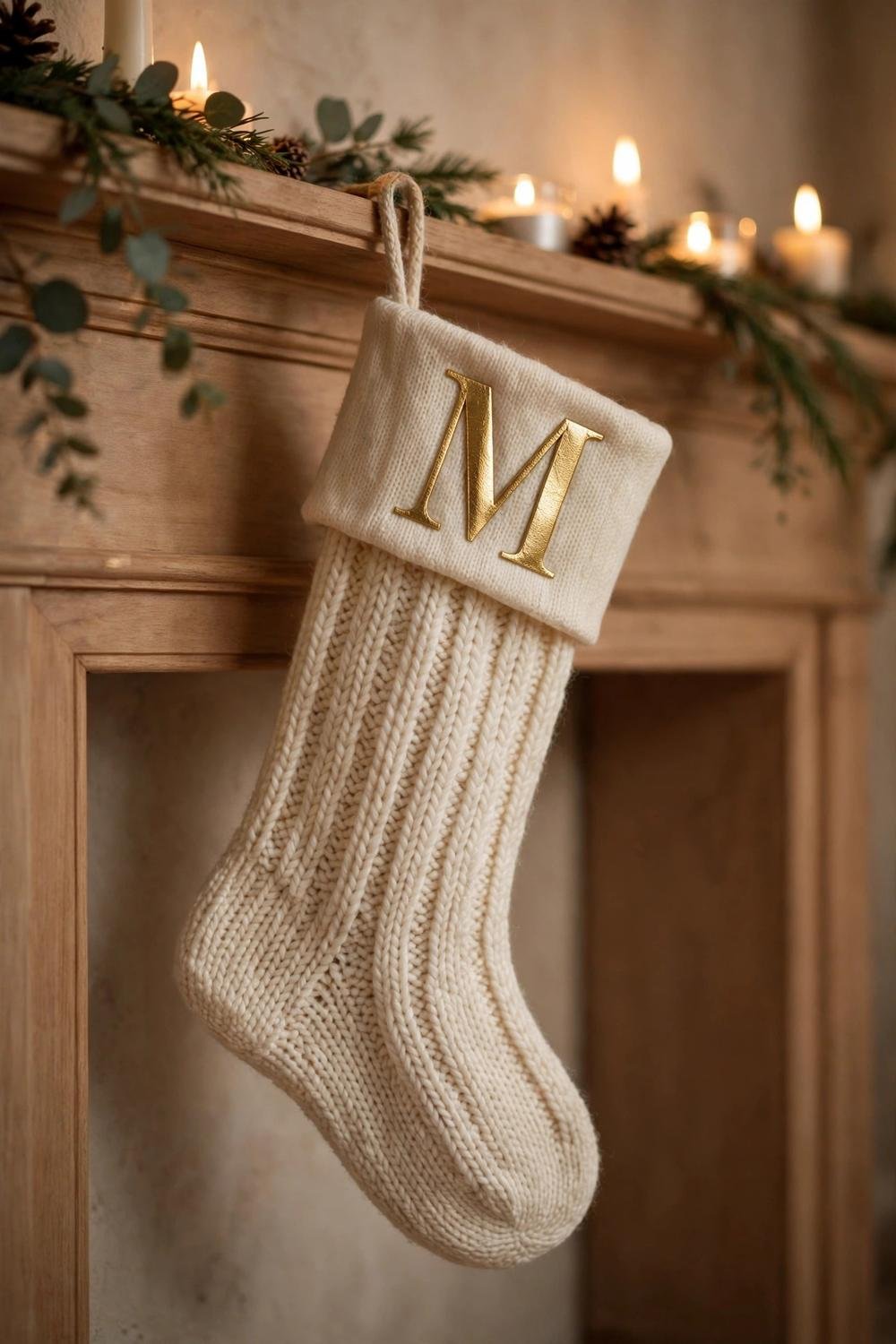
Iron-on letters are the fastest way to personalize a stocking, and they need no sewing at all. A pack of iron-on letters costs around $4 to $6 at craft stores and works on cotton, felt and most plain stockings. Position the letter on the cuff, cover it with a thin cloth, and press with a hot iron for about 20 seconds. Let it cool before you check the edges, and press again if any corner lifts.
Use a single initial for a classic look, or a full name if the stocking is wide enough. Gold or silver letters stand out on red and green fabric, while dark letters work better on cream or white. Avoid iron-on letters on velvet or knit, because the heat and texture stop them from sticking properly. If a letter starts to peel after a year, a dot of fabric glue and another press usually fixes it. This is a good option if you buy matching plain stockings and want each one to look different. If you are ironing onto a stocking that is already filled, empty it first, because the heat can melt chocolate or damage small items inside.
12. A five-dollar stocking makeover

You do not need new stockings to refresh the mantel. Take the plain stockings you already own and spend about $5 on ribbon, jingle bells and a small bag of pine cones or dried orange slices. Tie a wide ribbon bow at the cuff, stitch or glue two or three jingle bells to the toe, and tuck a sprig of pine or a cinnamon stick under the ribbon. The whole makeover takes about 15 minutes per stocking.
If the stockings are stained or faded, soak them in warm water with a little washing powder and dry them flat before you decorate. A new cuff is another cheap fix: cut a strip of contrasting fabric or faux fur, fold it over the top and stitch or glue it in place. Swap the ribbon colour each year and the same stockings look different every December. Keep a small box of ribbons, bells and trims so you can repeat the makeover without buying new supplies. Take a photo of each finished stocking before you hang it, so you can copy the look next year without starting from scratch.
Frequently asked questions
What size should a Christmas stocking be?
A standard stocking is about 18 inches long and 7 inches wide, which fits an orange, a few sweets and a small gift. Mini stockings of 4 to 6 inches work as ornaments or for a countdown.
How do you hang stockings without a mantel?
Use a staircase banister with ribbon ties, adhesive hooks on a wall or shelf, or clamp-style stocking holders on a shelf or bookcase. Keep them away from candles and open fires.
What do you put in a stocking for an adult?
Small useful things work best: a gift card, nice chocolate, a small candle, lip balm, a book, socks or a travel-size item. Keep it to five or six small items so the stocking is not overstuffed.
Can you wash a knit stocking?
Hand wash in cool water with a gentle detergent and dry flat so it keeps its shape. Do not put knit or velvet stockings in a hot dryer, as they can shrink or lose their texture.
How do I stop stockings from falling off the mantel?
Use weighted stocking holders that clamp onto the shelf, or adhesive hooks rated for at least 2 pounds. Keep the fillings light and check that the holder is wide enough for your mantel.
What is a good stocking filler for kids?
Stickers, a small toy, a wrapped sweet, a fun pencil, a bath bomb, a small puzzle or a joke card all work. Avoid tiny parts for children under three and anything that makes a mess.
Save these ideas for later
Pin this article so it is easy to find when you are ready to start.
Save to Pinterest