12 Christmas Tree Decor Ideas
The Christmas tree is the centerpiece of most living rooms in December, and decorating it is one of those jobs that sets the tone for the whole season. It does not need to be expensive or professionally styled. A clear color plan, lights that work properly and ornaments spaced evenly will carry almost any tree, whether it is a real fir from a farm or a pre-lit artificial tree that has been in the family for years.
Before you buy anything, measure the tree and the room. A 7-foot tree needs about 8 feet of ceiling clearance once the topper is on, and it needs roughly 3 feet of floor space around the base so people can walk past without knocking ornaments off. Count your lights as well: a good rule is about 100 mini lights per foot of tree height, so a 6-foot tree takes around 600 lights. Buy one spare strand and a box of extra ornament hooks, because both always run out halfway through.
These 12 Christmas tree decor ideas cover classic, rustic, modern and kid-friendly styles, and most of them use supplies that are easy to find at a craft store, a dollar store or a garden center. Pick one style and commit to it rather than mixing five at once. A tree with two colors and one repeated accent always looks more finished than a tree with everything thrown at it.
1. Classic red and gold
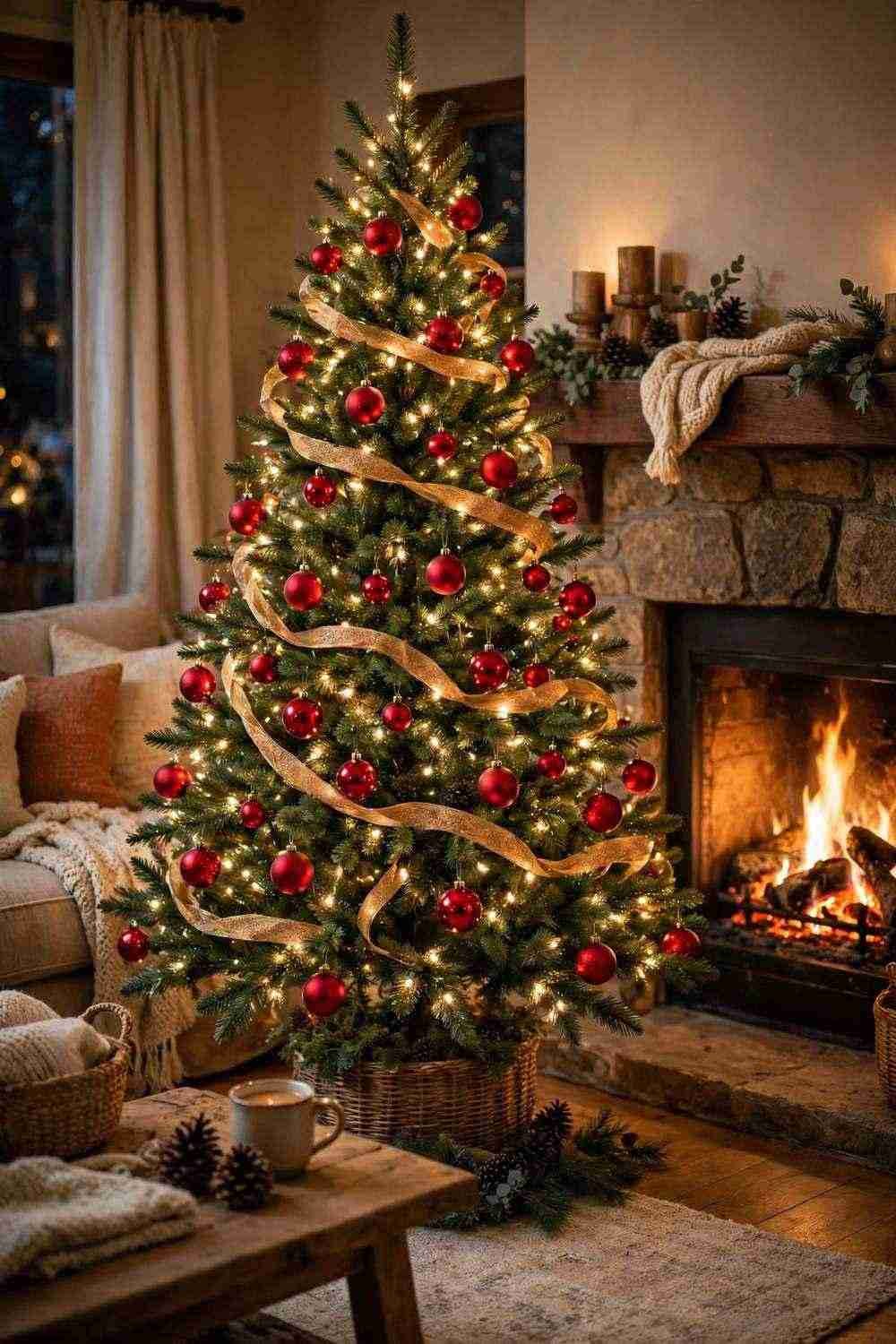
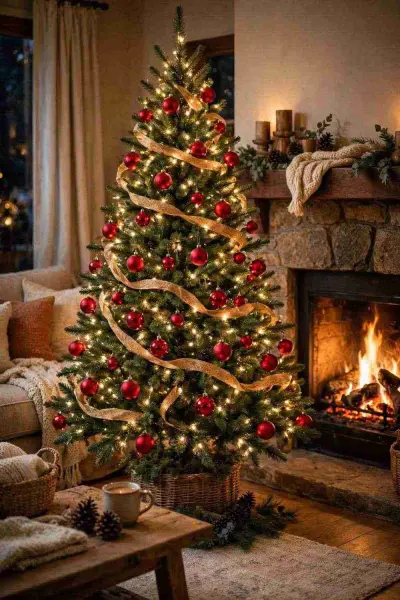
Red and gold is the most forgiving tree style there is, because the two colors work on any green tree and suit almost any living room. Start with warm white lights, then add a wide gold ribbon in a spiral from top to bottom, tucking it into the branches every 12 inches so it looks draped rather than wrapped. Then hang red baubles in three sizes, with the largest near the bottom and the smallest near the top, which keeps the tree looking balanced instead of top-heavy. A matching red bow on the front door ties the tree to the rest of the house.
Fill the gaps with gold pinecones, small gold stars and a few sprigs of red berries. A pack of 30 mixed red and gold baubles usually costs $10 to $15 at a craft store, and one roll of wired ribbon costs about $5. Keep the topper simple, a gold star or a red bow, and finish with a plain red or gold tree skirt. Avoid mixing in a third strong color such as blue or purple, because it breaks the classic look and makes the tree look busy.
2. White and silver frost
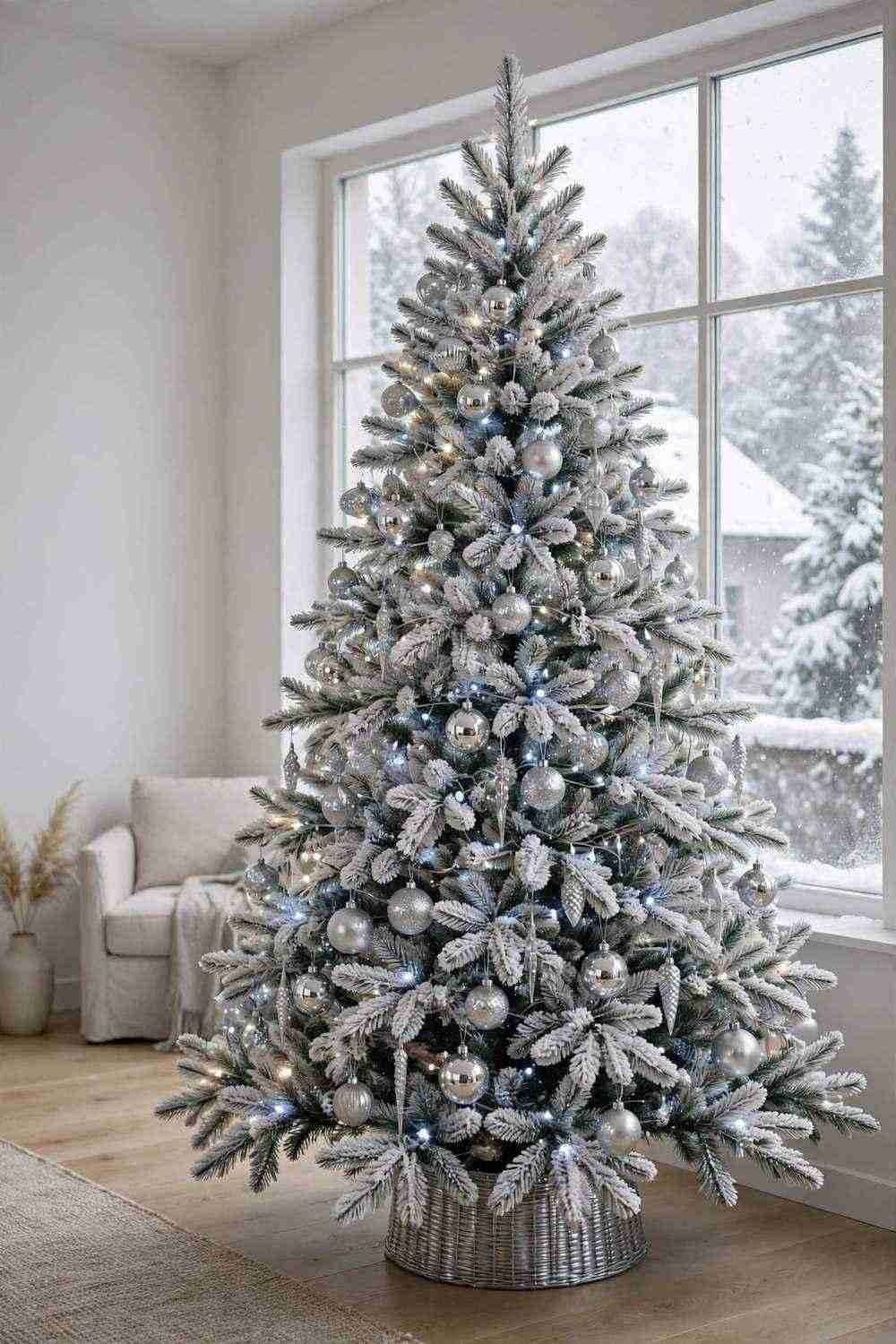
A white and silver tree suits bright rooms and modern furniture, and it looks especially good near a window in daylight. Use cool white lights rather than warm white, because warm light turns silver ornaments yellow and dulls the frosted effect. Hang silver baubles in matte and shiny finishes, add white snowflakes and a few clear glass icicles, and finish with a silver ribbon or a strand of white bead garland. A silver star topper and a white faux-fur tree skirt complete the frosted look.
If your tree is green, a can of snow spray on the outer branch tips will give the frosted look for a few dollars, but test it on a hidden branch first and keep the room ventilated while you spray. For a white artificial tree, the same ornaments read even brighter, so use fewer of them and let the white branches show. A silver or white tree skirt keeps the base tidy, and white-wrapped gifts underneath complete the look. Avoid gold here, because gold and silver together turn this style muddy.
3. Rustic woodland

The woodland look is built from natural materials, so it costs very little if you gather supplies outdoors. Collect pinecones, dry them in a low oven for 30 minutes to kill any bugs, and tie a loop of twine to each one. Cut burlap ribbon into a wide spiral around the tree, and hang wooden ornaments, dried orange slices and small bundles of cinnamon sticks tied with twine. Warm white lights suit this style far better than multicolor lights. A few sprigs of fresh cedar tucked into the branches add scent without costing anything.
A tree skirt made from a burlap sack or a woven basket as a tree stand cover finishes the look, and a few wrapped gifts in kraft paper with twine keep the palette consistent. This style works best on a full, slightly uneven real tree, because the natural ornaments suit a natural shape. Keep the ornaments light, since heavy pinecones can pull thin branches down, and hang the heaviest pieces close to the trunk where the branches are strongest.
4. Ribbon waterfall

A ribbon waterfall is the fastest way to make a plain tree look professionally decorated. Choose a wide wired ribbon, about 2.5 to 4 inches, in a color that matches your ornaments, and cut it into pieces about 3 feet long rather than trying to run one long piece down the whole tree. Starting at the top, tuck one end deep into the branches, let the ribbon billow out and down, and tuck the other end in about 18 inches lower. Fluff each ribbon loop after tucking it in, so the ribbon looks full rather than flat.
Repeat in a spiral around the tree, spacing each piece about 12 inches apart, and then hang ornaments in the spaces between the ribbon falls. Wired ribbon holds its shape, which is why it works better than soft ribbon for this. A 10-yard roll usually costs $6 to $10 and covers a 6-foot tree. Use the same ribbon on your gifts and your mantel garland to tie the room together, and avoid mixing two ribbon patterns, which makes the waterfall look confused.
5. Dried orange and cinnamon
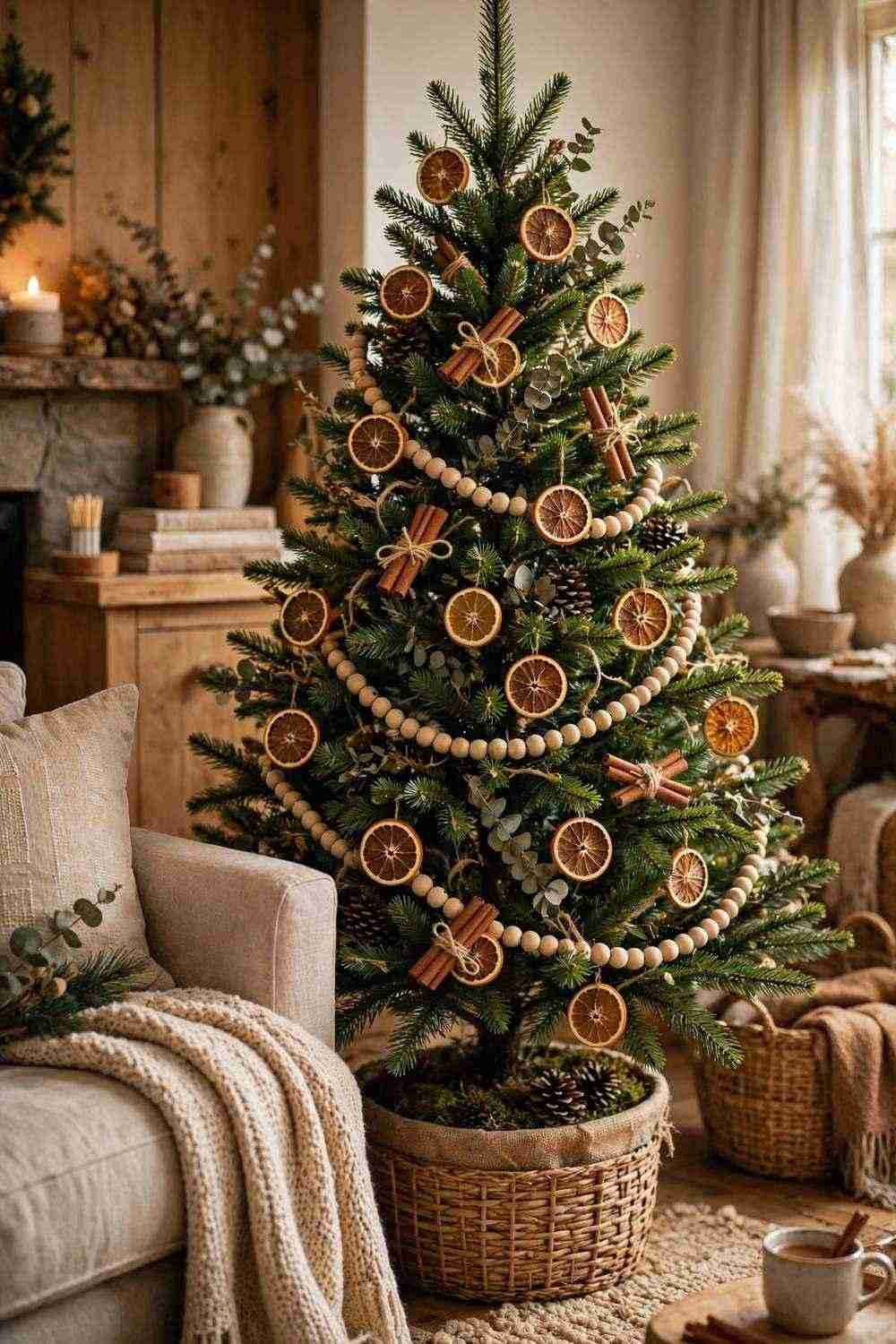
Dried orange slices and cinnamon sticks give a tree a warm, old-fashioned scent and a natural look that suits almost any style. Slice oranges about a quarter inch thick, bake them at 200°F for 2 to 3 hours until dry, turning them once, and let them cool overnight. Thread a needle with twine through the top of each slice to make a hanging loop, and tie cinnamon sticks in bundles of three with the same twine. Tie the slices with red and white bakers twine for a classic look that costs almost nothing.
Hang the orange slices near the outer branch tips where the light catches them, and tuck the cinnamon bundles deeper into the tree where their scent lasts longer. Wooden bead garland in a natural or cranberry color fills the gaps nicely. A dozen oranges makes about 60 slices, which is plenty for a 6-foot tree, and the whole project costs under $10. Keep the slices away from direct heat such as a fireplace, because they can scorch, and store leftovers in a sealed jar for next year.
6. Vintage glass ornaments
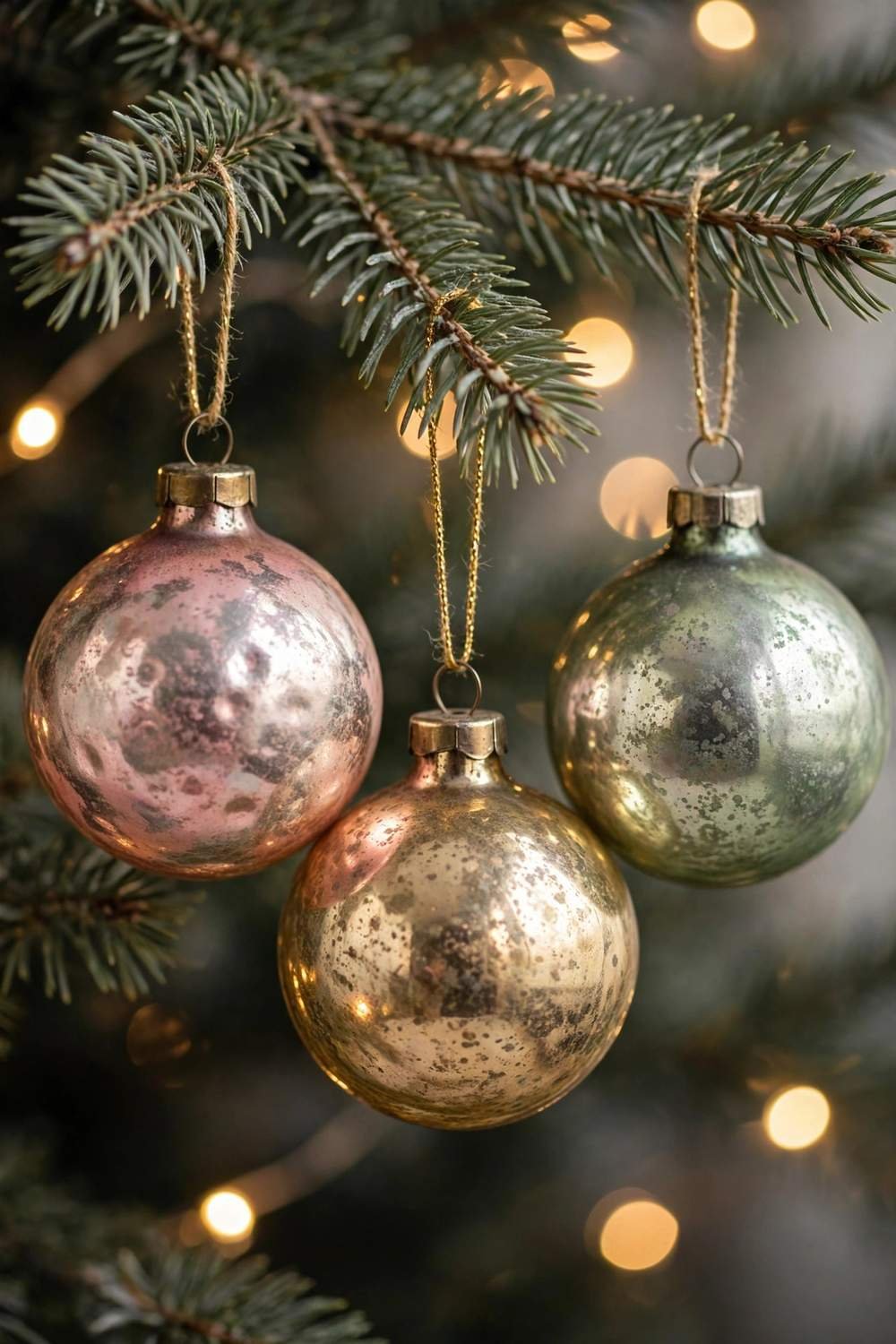
Mercury glass ornaments in blush pink, gold and sage green give a tree a soft, antique glow that shiny plastic baubles cannot match. They are usually sold in sets of 6 to 12 for $15 to $25 at craft stores and home stores, and they look best mixed with a few plain matte baubles so the tree does not look too glittery. Hang them on thin ornament hooks rather than string, because string lets them swing and chip. A few sprigs of faux frosted greenery tucked between the ornaments add depth without competing with the glass.
Put the most detailed ornaments at eye level, where they can be seen properly, and use plainer ones near the top and bottom. Warm white lights suit mercury glass best, because cool white light makes the pink tones look grey. If you find genuine vintage ornaments at a thrift store, check them for cracks and wash them gently in soapy water before hanging. Wrap each one in tissue paper when you pack the tree away, and keep the box somewhere it will not be stacked under heavy boxes.
7. Kids handmade ornaments
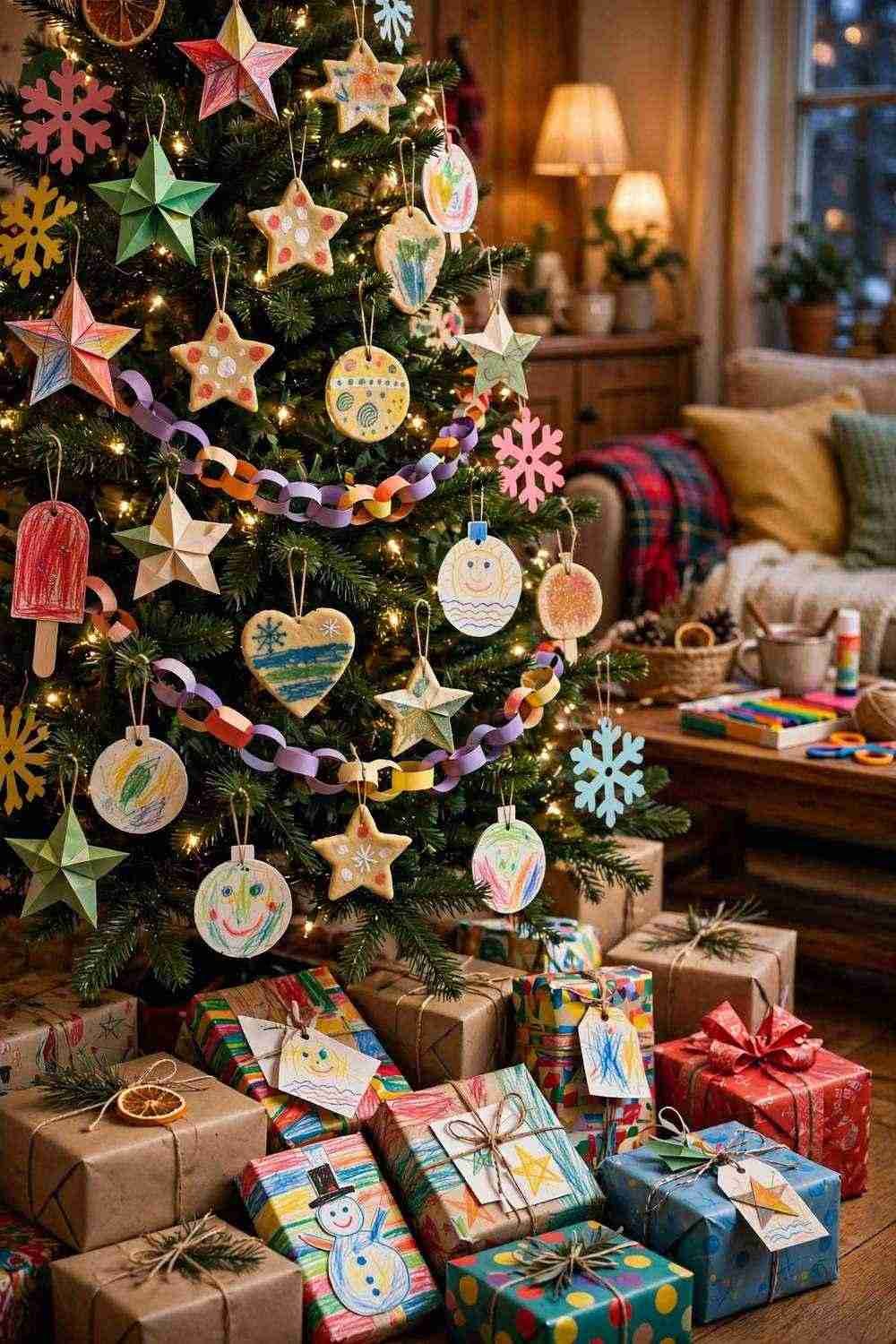
A tree covered in handmade ornaments is the most personal tree in the house, and it is also the cheapest to decorate. Salt dough ornaments take flour, salt and water, cost almost nothing, and can be cut into stars, trees and snowmen with cookie cutters, then baked and painted. Paper ornaments, popcorn chains and painted pinecones are just as easy, and children can make a whole set in one afternoon. Let each child pick one ornament to hang first, so everyone feels the tree belongs to them.
Mix the handmade pieces with plain baubles in one or two colors so the tree still looks pulled together rather than cluttered. Hang the lightest paper ornaments near the branch tips and the heavier salt dough pieces closer to the trunk. Date each ornament on the back with a marker, because in a few years those dates become the best part of the tree. Keep a few spare hooks handy, because handmade ornaments break more easily, and store them in a box with dividers rather than loose in a bag.
8. Snow-flocked tree
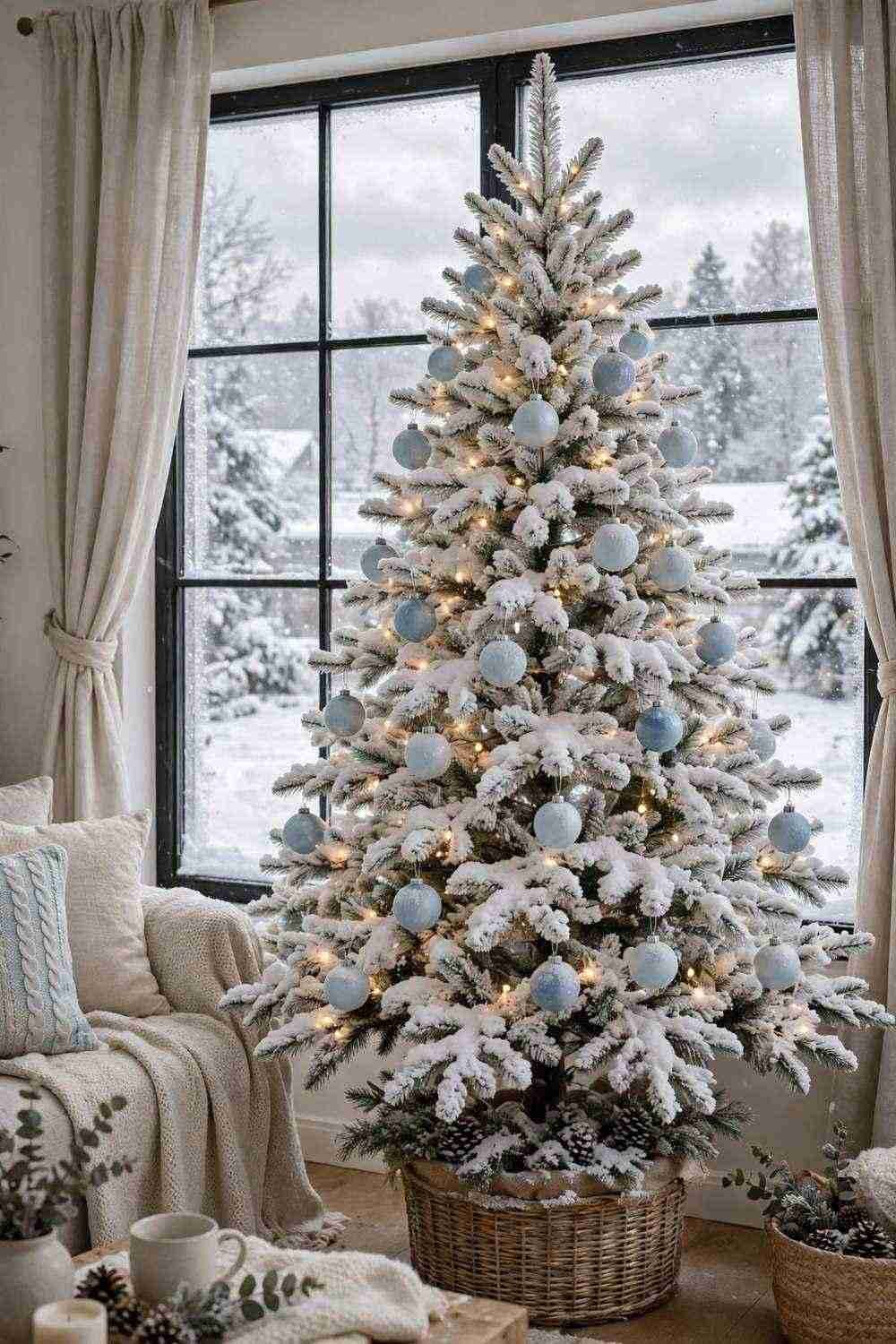
A flocked tree looks like it has just come in from a snowfall, and it needs very little else to look finished. You can buy a pre-flocked artificial tree, or flock a green tree yourself with a can of flocking spray, which costs about $8 to $12 per can and covers a 6-foot tree with two cans. Spray outdoors or in a garage, let it dry for a full day, and expect some mess on the floor underneath. A few white pom-pom ornaments scattered through the branches make the snow look even deeper.
Pale blue, silver and white ornaments suit a flocked tree best, because strong colors fight with the white branches. Use cool white lights, and add white ribbon or white bead garland rather than a colored one. A white or pale grey tree skirt keeps the snowy look going to the floor. Avoid flocking a tree that will sit near a fireplace or a heater, because the flocking can dry out and shed, and vacuum the area around the tree once a week during December to keep the white dust under control.
9. Blue and white winter

Deep blue and white is a calm, wintry palette that suits both modern and traditional rooms, and it photographs beautifully. Use navy and royal blue baubles in matte and shiny finishes, white snowflakes, silver icicles and a silver or white ribbon. Cool white lights keep the blue tones crisp, while warm white lights make them look purple, so check the light color before you buy. A string of silver bead garland adds shine without adding another color to the palette.
Place the darkest ornaments near the bottom of the tree and the lightest near the top, which stops the tree from looking top-heavy. A white or silver tree topper and a white tree skirt finish the look, and silver-wrapped gifts underneath keep the palette going. This style works well in a room with white walls or grey furniture. Avoid adding red or gold, because even a few warm pieces break the cool winter feel and make the tree look like two styles at once.
10. Minimalist Scandinavian
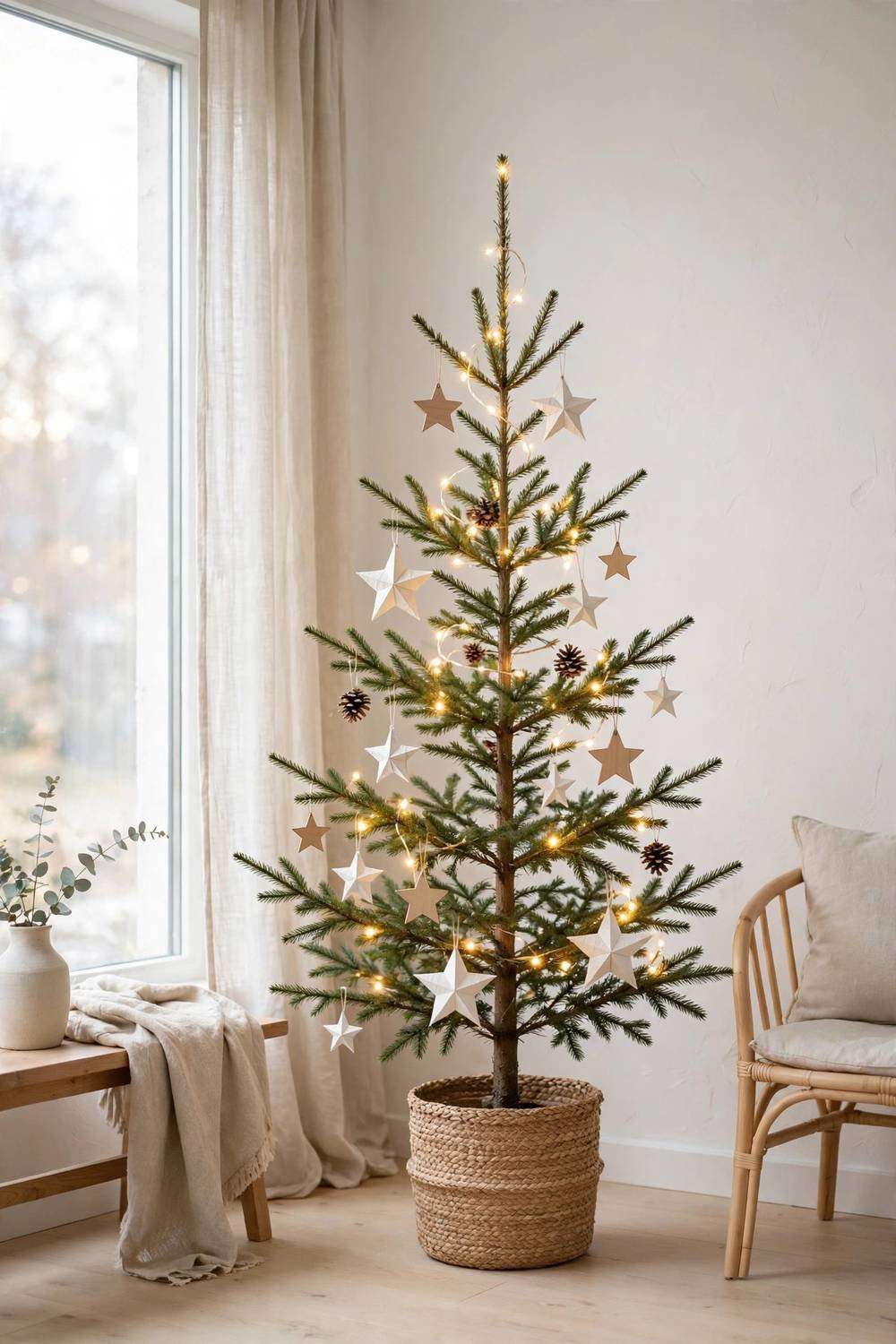
The Scandinavian look is about restraint: a sparse tree, a few natural ornaments and a lot of empty branch showing. Use a slim tree rather than a full one, and hang only 20 to 30 ornaments, mostly natural wood, white paper stars and a few plain white baubles. Warm white lights, spaced widely, give a soft glow without making the tree look busy. A small wooden star on top and a woven basket at the base are all the finishing this style needs.
A simple woven basket as a tree stand cover replaces the tree skirt, and a paper star topper replaces a heavy star. Keep the gifts underneath wrapped in kraft paper with plain twine. The most common mistake with this style is adding too much: if the tree starts to look full, take ornaments off rather than adding more. This style suits small rooms and apartments, because a slim tree takes up less floor space and the pale palette makes the room feel larger.
11. A star or angel on top

The topper is the last thing you add and the first thing people notice, so it deserves more thought than a leftover ornament. A lighted star topper works best on tall trees, because it draws the eye upward and balances a heavy base. A ceramic or fabric angel suits a traditional tree, while a simple paper star fits a minimalist one. Measure the topper against the tree before you buy: a topper taller than 10 inches can overwhelm a 6-foot tree. If the topper feels wobbly, wrap a pipe cleaner around the top branch and the topper base for extra grip.
Secure the topper properly, because a topper that leans or falls is the most common tree accident. Push it firmly onto the top branch, tie it to the branch with a piece of wire or twine, and check it again after the lights have been on for an hour, since the heat can loosen it. If you use a lighted topper, plug it into the same timer as the tree lights so it switches off at night. Keep a spare topper in the box, because toppers break more often than any other decoration.
12. Tree skirt and gifts

The base of the tree is easy to forget, but a good tree skirt and well-wrapped gifts make the whole tree look finished. A knitted or woven tree skirt in cream, red or plaid costs $15 to $30 and lasts for years, and it hides the tree stand and the tangle of light cords. A tree collar, which is a rigid ring that sits around the base, is a neater option if you have pets or small children who pull at fabric skirts. Slip a few pinecones and a sprig of greenery onto the skirt itself for a finished look.
Wrap the gifts in two or three matching papers and one ribbon color so the pile under the tree looks like part of the decoration rather than an afterthought. Place the largest gifts at the back and the smallest at the front, and leave a gap at the front so the skirt is still visible. Put the gifts out a few days before Christmas rather than weeks early, because paper fades in sunlight and pets tend to chew the corners. A few sprigs of greenery tucked between the gifts ties the base to the tree above it.
Frequently asked questions
How many lights do I need for a Christmas tree?
About 100 mini lights per foot of tree height. A 6-foot tree needs around 600 lights, and a 7-foot tree needs around 700.
When should I put up the Christmas tree?
Most families put the tree up in late November or early December. A real tree lasts about 4 weeks indoors if you keep the stand filled with water.
How do I keep ornaments from falling off?
Use metal ornament hooks rather than string, hang heavy ornaments close to the trunk, and check the hooks after the first day, since branches settle under the weight.
Can I mix warm white and cool white lights?
It is better not to. Mixed light colors make the tree look uneven. Pick one color and use it for the whole tree, including the topper.
What size tree topper should I buy?
A topper up to 10 inches tall suits a 6-foot tree. Taller toppers work on 7-foot and taller trees, but a topper that is too big makes the tree look top-heavy.
How do I store ornaments after Christmas?
Wrap fragile ornaments in tissue paper, store them in a divided box, and keep the box in a dry place. Label the box so you can find it next year.
Save these ideas for later
Pin this article so it is easy to find when you are ready to start.
Save to Pinterest