12 Christmas Gift Wrapping Ideas
Good wrapping makes a gift feel special before it is even opened, and it does not need to cost much. A roll of kraft paper, a ball of twine and a few sprigs of greenery can look better than the most expensive printed paper, because the wrapping looks deliberate rather than bought in a hurry. The ideas below range from five-minute fixes to reusable fabric wraps, and most use supplies you already have at home.
Before you start, set up a flat surface and gather everything in one place: paper, scissors, tape, ribbon, tags and a pen. Wrapping on the floor hurts your back and creases the paper, so use a table or a kitchen counter. Buy paper in rolls rather than sheets if you wrap more than ten gifts, because rolls are cheaper per gift and easier to cut straight. A standard roll of 30 inches by 10 feet covers about six to eight medium boxes. Keep a small bin for offcuts, because strips of paper and ribbon are useful for tags and small gifts.
Match the wrapping to the gift and the person. A child's present can be bright and messy, a gift for a colleague should look neat and simple, and a present for someone who cares about waste can be wrapped in fabric or a scarf they keep. The best wrapping is the kind that takes a minute to undo and makes the person smile before they see what is inside.
Jump to an idea (12)
- Kraft paper and twine
- Furoshiki fabric wrapping
- Newspaper and comic pages
- Brown paper with dried orange slices
- Velvet ribbon and wax seals
- Reusable drawstring gift bags
- Wrapping with scarves
- Kids artwork wrapping paper
- Matching paper for a tree look
- Gift tags from old cards
- Wrapping odd shapes
- A wrapping station setup
1. Kraft paper and twine

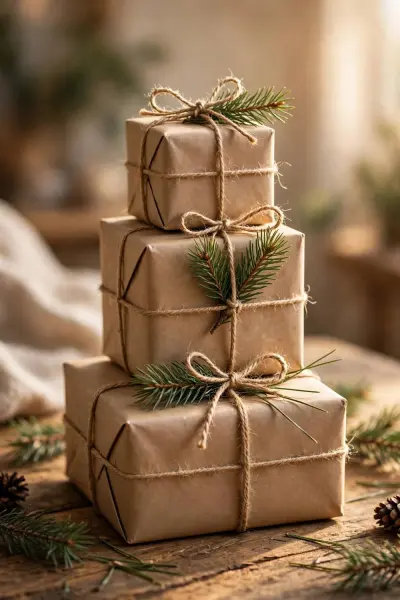
Kraft paper and twine is the simplest wrapping that still looks good, and it costs very little. A roll of kraft paper is around $5 to $8 at craft or office stores, and a ball of jute twine costs about $3. Wrap the box neatly, tie the twine around it twice and finish with a small bow. Tuck a sprig of pine, a cinnamon stick or a dried orange slice under the twine for colour, and write the name directly on the paper with a marker or on a small kraft tag.
The plain paper is forgiving: small creases and uneven edges are hard to notice, which makes it good if you are not confident with wrapping. It also takes stamps well, so you can stamp snowflakes or stars across the paper before you wrap, or let children draw on it. Use double-sided tape on the seams so no tape shows on the outside. Kraft paper is recyclable and compostable, which suits anyone who wants less waste at Christmas. A roll of kraft paper also works for wrapping odd shapes, because it folds and creases more neatly than glossy printed paper.
2. Furoshiki fabric wrapping

Furoshiki is the Japanese art of wrapping gifts in cloth, and the cloth becomes part of the gift. You need a square of fabric about three times the width of the gift: a scarf, a tea towel or a piece of cotton works well. Place the gift in the centre, fold opposite corners over it, tie the other two corners in a knot on top, and tuck the ends in. A patterned fabric looks best, and a plain one can be decorated with a sprig of greenery under the knot.
Fabric wrapping suits awkward shapes such as bottles, books and round boxes, because the cloth moulds around them instead of creasing. It also produces no waste, which makes it popular with people who dislike throwing paper away. Charity shops are a good source of cheap scarves and fabric squares, often for $1 to $3 each. Practice the fold once with a book before you wrap the real gift, and keep the knot on top so it is easy to undo. Silk scarves look beautiful but slide around while you fold, so cotton or linen is easier if this is your first time.
3. Newspaper and comic pages

Old newspaper or comic pages make free, characterful wrapping paper, and they suit gifts for readers, children and anyone with a sense of humour. Choose pages with large headlines, comic strips or interesting photos, and avoid pages with smudged ink or anything too dark. Wrap as normal, then add a bright ribbon in red or gold so the gift does not look like a parcel. A layer of tissue paper inside the box keeps the gift clean.
Newspaper tears more easily than wrapping paper, so use two layers for heavy gifts and tape the seams well. The print can transfer onto light-coloured items, so wrap the gift itself in tissue first. This is a good option for a family wrapping session: spread the papers on the table and let everyone choose a page for their gift. It costs nothing, it recycles paper that would otherwise go out, and it always gets a comment when the gift is opened. Comic pages from a Sunday newspaper are usually printed on slightly thicker paper, which tears less than daily newsprint.
4. Brown paper with dried orange slices

Dried orange slices and cinnamon sticks turn plain brown paper into wrapping that looks and smells like Christmas. Slice oranges about a quarter of an inch thick, dry them in the oven at the lowest setting for 2 to 3 hours, turning them once, and let them cool completely. Tie one slice and a cinnamon stick to the gift with twine or thin ribbon. A batch of two oranges gives you about 12 slices, enough for a dozen gifts.
The slices keep for weeks in a dry jar, so make them in early December and use them as you wrap. They are flat enough to post and light enough not to add to postage costs. Pair them with a sprig of rosemary or a small pine cone for a fuller look, and write the name on a small tag rather than on the paper so the decoration stays the focus. Avoid fresh orange slices, which stain the paper and go soft within a day. If your oven runs hot, dry the slices at the lowest setting with the door slightly open so they dry out instead of browning.
5. Velvet ribbon and wax seals
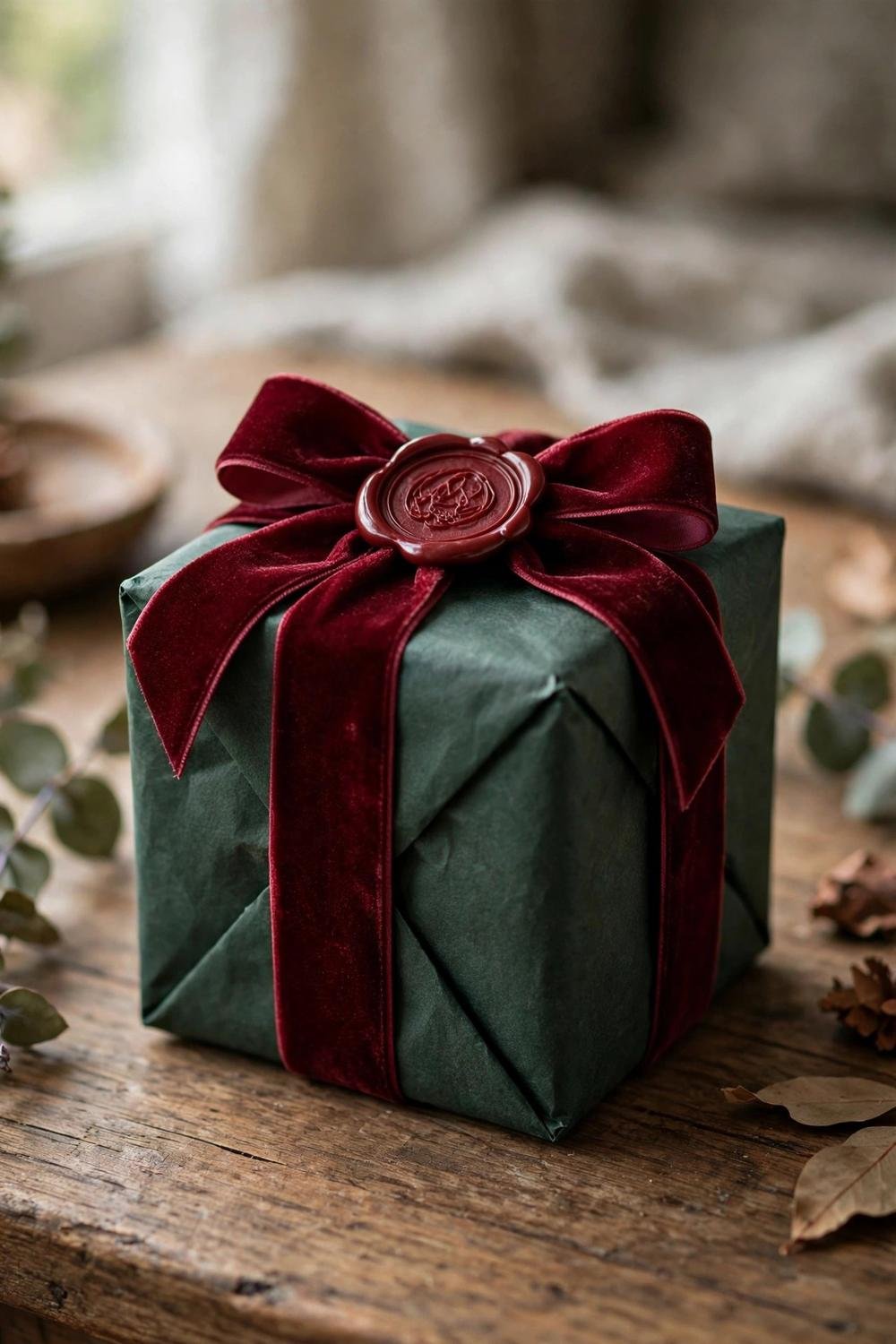
A wide velvet ribbon and a wax seal make even cheap paper look luxurious. A spool of velvet ribbon costs around $4 to $6, and a wax seal kit with a stamp and wax sticks costs about $10 to $15 and lasts for years. Wrap the gift in plain paper, tie the ribbon around it, and press the seal onto the ribbon where it crosses on top. A simple star, tree or initial stamp works best, and red or gold wax shows up well on dark paper.
Let the wax cool for a minute before you move the gift, and keep the seal flat so it does not crack. If you are wrapping many gifts, stamp the seals onto baking paper first and glue them on once they are cool, which is faster than sealing each gift by hand. Velvet ribbon is worth buying in a dark green or burgundy that you can reuse for several years. This style suits gifts for adults, and it photographs well if you like to share your wrapping. A single spool of wide velvet ribbon usually covers about eight to ten gifts, so one spool is enough for most families.
6. Reusable drawstring gift bags

Drawstring gift bags are the fastest way to wrap a gift, and they can be used again next year. You can buy a set of cotton or linen bags for $1 to $3 each, or sew your own from a rectangle of fabric folded in half with a channel at the top for a cord. Put the gift inside, pull the cord tight and tie a bow. Add a tag with the name and a small decoration such as a bell or a pine sprig.
Bags are ideal for soft gifts such as scarves, socks, toys and bottles, and for anything oddly shaped that is hard to wrap in paper. Choose fabric in a Christmas print or a solid colour that matches your tree, and keep a set of different sizes so you are ready for any gift. Because there is no cutting, folding or tape, a bag takes about 30 seconds to use, which matters when you have twenty gifts to wrap on Christmas Eve. Wash them after the holiday and store them flat. Label each bag with a tag rather than writing on the fabric, so the bag stays clean and reusable for next year.
7. Wrapping with scarves

Wrapping a gift in a scarf gives the recipient two presents in one, and it is a good choice for a winter birthday or a Christmas gift for someone who is always cold. Choose a scarf large enough to wrap around the gift with the ends left over to tie in a knot or a bow. Fold the scarf in half, place the gift in the centre, bring the corners together and tie them. A plaid or solid-colour scarf looks best, and a soft fabric is easier to fold than a stiff one.
Thrift shops and end-of-season sales are good places to find scarves for $2 to $5. Make sure the scarf is clean and free of snags before you use it, and avoid very thick knitted scarves, which are hard to fold neatly. This works well for books, boxes and bottles, and the recipient can wear the scarf straight away. Add a small tag tied to the knot so the gift is easy to identify under the tree. A scarf in a solid colour shows the fold lines less than a patterned one, which is worth remembering if you are new to this.
8. Kids artwork wrapping paper

Children's paintings and drawings make wrapping paper that grandparents and relatives will love, and it costs nothing. Use large sheets of plain paper or the back of old posters, and let children paint stars, trees, snowmen or simple patterns with poster paint or crayons. Let the paper dry completely, then use it to wrap gifts for family members. A potato stamp cut into a star shape gives a neat repeating pattern even for very young children.
Cover the table with newspaper before you start, and use washable paint so clothes and hands clean up easily. The artwork does not need to be perfect: a slightly messy sheet looks charming under a ribbon. If you want the paper to look more finished, add a plain ribbon in a single colour rather than a patterned one. Keep a few sheets aside for next year, because grandparents often keep the paper as a keepsake. Roll the finished paper loosely rather than folding it, because creases show up more on painted paper than on printed paper.
9. Matching paper for a tree look

Using one or two matching papers for every gift makes the pile under the tree look coordinated and impressive, and it is easier than choosing a different paper for each present. Pick a main paper in a solid colour or a simple pattern, and a second paper that contrasts with it, such as red and kraft, or navy and gold. Wrap roughly half the gifts in each, and use the same ribbon and tags throughout.
Buy the paper in rolls so the pattern lines up, and keep a small offcut to match the ribbon in the shop. Use the same tag style for every gift, with the name written in the same pen. The tree skirt or a plain blanket underneath the gifts helps the colours stand out in photos. This approach saves time because you do not have to decide on paper for each gift, and it makes even small gifts look like part of a set. If you run out of your main paper mid-way, use the second paper for the largest gifts so the change looks deliberate.
10. Gift tags from old cards

Old Christmas cards make free gift tags, and they are sturdier than shop-bought ones. Cut the front of the card into a tag shape, punch a hole at the top and thread twine or ribbon through it. Write the name on the blank back. A single card usually makes two or three tags, and a shoebox of old cards will last for years.
Use a template cut from cardboard so every tag is the same size, and trim the edges with decorative scissors if you have them. Tags with a picture of a robin, a tree or a snowman look best, and plain gold or red cards work for a simple style. Keep the tags in an envelope with your wrapping supplies so they are ready when you need them. This is a good job for a quiet evening in front of the television, and it stops good cards from going in the recycling. A single-hole punch costs about $2 and lasts for years, and it makes neater holes than a pair of scissors.
11. Wrapping odd shapes

Bottles, balls, soft toys and other odd shapes are the hardest gifts to wrap, and the trick is to stop trying to fold paper around them. Put a bottle in a tall gift bag or wrap it in tissue and tie the top with ribbon. A ball or a soft toy goes into a fabric bag or a box first, then the box is wrapped normally. For a round gift, gather the paper above it like a sweet wrapper and tie it with ribbon.
Keep a few boxes in different sizes for this purpose: shoe boxes, cereal boxes and postal boxes all work, and you can pad them with tissue paper so the gift does not rattle. Wrap the box rather than the gift, and the result looks neat under the tree. If you have no box, use a double layer of tissue paper and a wide ribbon, which hides the shape better than a single layer of wrapping paper. Label the gift clearly, because odd shapes are easy to mix up. If a gift rattles inside its box, stuff the gaps with tissue paper so it does not slide around and tear the wrapping.
12. A wrapping station setup
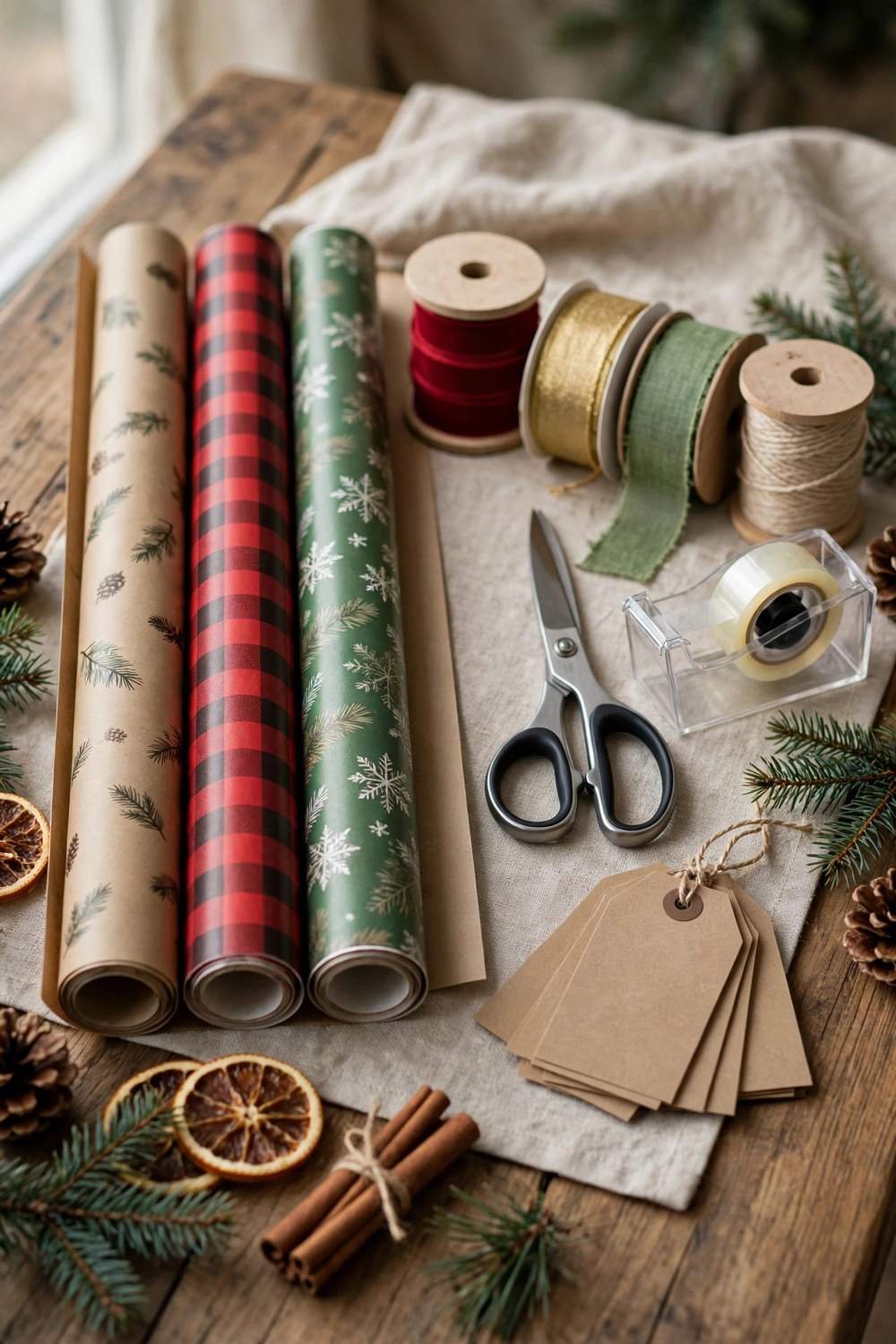
A wrapping station turns a chore into a job you can finish in one sitting. Set up a table with a roll of paper on a dowel or in a box so it unrolls without sliding, scissors and tape in a jar, ribbon on a rod or in a basket, and tags and pens in a small tray. Keep a bin underneath for offcuts and a bag for rubbish, so the table stays clear. A folding table in a spare room works well if you do not want the dining table taken over for a week.
Wrap in batches: do all the gifts for one person at a time, and stack the finished ones in a box or a bag with the name on it. Cut the paper to size before you start folding, and keep a ruler nearby so the cuts are straight. Put on music or a film in the background and set a timer for an hour, then take a break. A good station means you can wrap twenty gifts in an evening without losing scissors, tape or patience, and everything is ready to go under the tree. Keep a small dustpan and brush near the station, because paper offcuts and ribbon ends get everywhere and are easier to clear up as you go.
Frequently asked questions
How much wrapping paper do I need for Christmas?
A standard roll of 30 inches by 10 feet wraps about six to eight medium gifts. Count your gifts first, then buy one roll per eight gifts and keep a spare roll for mistakes.
What is the best tape for wrapping gifts?
Double-sided tape gives the neatest finish because it does not show on the outside. Clear tape is fine for the inside seams, and washi tape works as decoration on plain paper.
How do I wrap a gift without tape?
Use fabric wrapping, a drawstring bag or a ribbon tied tightly around the paper. A folded tuck on the ends holds the paper in place if you crease it firmly.
Can I reuse wrapping paper?
Yes, if you open gifts carefully and fold the paper flat. Kraft paper, fabric and gift bags reuse well. Glitter paper and foil paper usually tear and are hard to recycle.
What is the cheapest way to wrap gifts?
Newspaper, brown paper bags, old maps and fabric scraps all cost little or nothing. Add a ribbon or a sprig of greenery so the gift still looks finished.
How do I keep wrapping paper from tearing?
Use a fresh blade or sharp scissors, cut on a flat surface, and do not pull the paper tight around the box. A double layer of thin paper is stronger than a single layer.
Save these ideas for later
Pin this article so it is easy to find when you are ready to start.
Save to Pinterest